Om å gjøre gode kjøp – før og nå

Hvis en skulle kjøpe en litt dyr vare for 30 år siden, så var det naturlig å skaffe seg oversikt over markedet, gjennom å lese annonser i aviser og fagblader, samt å ringe eller besøke butikker. Dessuten snakket en gjerne med bekjente som hadde erfaring, og rådførte seg med viktige familiemedlemmer. Prosessen kunne ta ganske lang tid, og det var ikke sikkert du kunne funnet ut alt du ønsket å vite om varen fordi det ikke var noe sted der tidligere kunder kunne fortelle om sin opplevelse.

I dag kan en bruke internett til raskt å få vite nesten alt om en vare, hvor en burde kjøpe den for å få best mulig pris og kvalitet, om tidligere kunders opplevelse med varen, og om hvor mange som gir varen 5 av 5 mulige stjerner.

Tiden en bruker til å finne ut informasjon om en vare eller en tjeneste, og kvaliteten på denne informasjonen er mye verdt for mennesker i dag. Vi kaller det transaksjonskostnader.

Hvis transaksjonskostnadene er lave er tiden som er brukt for å skaffe informasjon lav, og kvaliteten på informasjonen god. Hvis transaksjonskostnadene er høye, har en brukt mye tid, og kvaliteten på informasjonen en fikk var kanskje ikke så god heller. Kostnadene blir spesielt høye dersom varen ikke holder mål, og en må klage på den og i verste fall kanskje gå til sak mot selger for å få pengene igjen!

Internett har gjort at transaksjonskostnadene for mange har gått veldig ned!

For min del har nettstedet www.tripadvisor.com gjort det lettere å bestille hotell når vi har dratt på ferie til utlandet. Vi har kunnet lese tidligere gjesters innlegg om deres opplevelse av hotellet. I tillegg har tjenesten www.finn.no gjort familiens kjøp og salg av bil de siste årene til en mye lettere affære. Vi synes vi har kunnet sammenlikne biler, og funnet hva som er et fornuftig prisnivå veldig greit. Spesielt siden ingen av oss er eksperter på bil! Våre transaksjonskostnader innen det å søke frem informasjon, forhandle om pris, samt å fatte beslutninger har blitt mye lavere. Vi synes vi har spart mye tid, og dermed også penger på å kunne benytte Web 2.0 tjenester på internett til større innkjøp, i forhold til hva vi kunne for 30 år siden.

Wonder by R.J. Palacio

Wonder, by R J Palacio

I have had R.J. Palacio’s novel on my ipad a while. I just never found the time to start reading it. Other books on my short list kept seeming more interesting, until a student of mine said she had chosen it to read this term! I know we like the same type of books, so I decided I should read it too, and blog about it as the reading progressed.

Maybe this is a book I can read, and put away a bit, to digest, and continue reading – and blogging about? We’ll see. 🙂

I found an article from the Times, in which the journalist wondered whether “Wonder” was the best novel from 2012. I know that “Code Name Verity” was my favourite novel in 2012, so I’m interested to see if this one can live up to Elizabeth Wein‘s great novel.

After reading the first 15% of the novel, (funny this; how reading e-books has changed how we talk about reading) I find that the author describes really well how the main character, August, perceives other people’s reaction to him, and the ways they try to hide it too.

The main character’s name immediately brings to mind another massive favourite novel of mine from this year: John Green’s “The Fault In Our Stars“! Sigh! I think this is my favourite novel so far this year! 

Well, “August” has found a place in my heart. Even though it is a week since I read the first part of the novel, I still think about him!


Sources:

http://www.thetimes.co.uk/tto/education/schoolgate/article3344668.ece

Home

http://johngreenbooks.com/the-fault-in-our-stars/

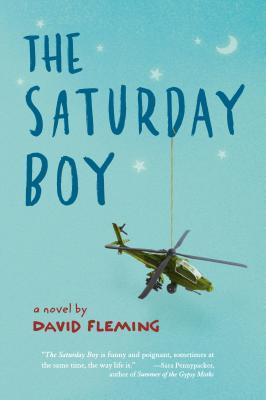
The Saturday Boy by David Fleming

Image

In this blog I wanted to share my experience of reading David Fleming’s novel “The Saturday Boy”. I planned to read a chapter or so at a time, and to add to this blog along the way.

I teach English as a second language at Ramstad school in Bærum, and my students are also blogging about a novel this term. This way we can share our reading with friends and family, and hopefully get some ideas for our future reading, and some feedback on our blogs too. This is the first time I ask students to blog about a novel, so many of us are “greenhorns” regarding blogging ! 🙂

I first came across “The Saturday Boy” on Amazon, and fell for the blurb and description of the novel:

If there’s one thing I’ve learned from comic books, it’s that everybody has a weakness—something that can totally ruin their day without fail.

For the wolfman it’s a silver bullet.
For Superman it’s Kryptonite.
For me it was a letter.

With one letter, my dad was sent back to Afghanistan to fly Apache helicopters for the U.S. army.”

It turned out that this was a novel I read very quickly. Once I started reading it was no holding back, neither the number of pages nor the tears… So, you know; it’s that kind of book!

I feel a lot for all the characters in this novel. Well, almost all the characters; Budgie’s parents didn’t impress me much, to borrow a phrase from Shania Twain 🙂

For me it was an additional pleasure that the main character, Derek, participates in “A Christmas Carol” by Charles Dickens. This made for an even richer reading experience. I do love “A Christmas Carol”! 🙂

I can recommend this novel to anyone who enjoys reading, and who has experienced loss at some point in their lives, and who knows that life goes on after all! 🙂

Sources:

http://en.wikipedia.org/wiki/English_as_a_second_or_foreign_language

http://www.ramstadskole.no/

http://www.thefreedictionary.com/greenhorn

Image: http://www.goodreads.com/book/show/16101174-the-saturday-boy

Digital tools in my classroom

A cascade of leaves

A cascade of leaves

I work as a teacher at Ramstad middle school http://www.ramstadskole.no/ in Baerum county next to Oslo in Norway. I teach grade 9., and my subjects are English, social science and international cooperation. This term I decided to try to make my classroom more global.

My inspiration came from many persons, but among those was Svein Andreas Horgen: http://gjemmesiden.blogspot.no/ He held a really inspiring lecture about Web 2.0 at a conference about education that I attended in Bergen in February last year.

Also, the experiences made at one of our neighbouring high schools: Sandvika, put in motion by a teacher called Ann S. Michaelsen was calling out to me. She wrote an e-book with one of her classes about creating a global classroom: http://www.amazon.com/Connected-Learners-creating-classroom-ebook/dp/B00CYEFX8E/ref=sr_1_3?ie=UTF8&qid=1378640337&sr=8-3&keywords=global+classroom

Fore some years I have used MS Office, youtube, wikipedia and  different websites in combination with a computer and a projector, in an attempt to make my classes more relevant for my students. This seemed to work quite well with regard to teacher driven lessons, but I want my students to use technology more for themselves in their learning, and to cooperate more, and not just watch the teacher having a go at it.

First, I enrolled in the EU program eTwinning, and found a partner class in Slovenia for my international cooperation class. We share a project called “You, me and the others, that’s us!”. This will allow our students to learn more about the similarities and differences between them, and they can practice using English too.

Next I had my new students explore one digital tool during their second week at school: http://www.glogster.com. They made wall posters in all my classes. The posters were great, but we didn’t manage to print them so easily. However, as the main objective was to learn how to use the tool, the product was less important!

This week I am asking my students to establish accounts with http://www.evernote.com , http://www.x-mind.net and http://www.wordpress.com. I intend to have them using wordpress to blog about an English novel this term. I think everyone deserves to know about evernote, because this is the digital tool closest to my heart right now! I also hope that x-mind will become useful to them when they want to brainstorm an idea and make a mind map. Next I want them to explore http://www.diigo.com for organizing all their bookmarks and websites they use during their week, and http://www.dropbox.com for saving all their work in the cloud.

Using these tools together can take your learning to another level I think, and I want this for my students!

So, my goal is to let my students experience how digital tools can help them organize their notes and thoughts better, and hopefully let them learn how sharing their knowledge will increase it!

Finally, to help me develop a deeper understanding I have entered a MOOC at the Norwegian University of Science and Technology about “Technology and Change in Society” http://www.ntnu.no/web/aktuelt/pressemeldinger/13/mooc-apning So, I am exploring some very interesting new digital tools this term, with the goal of making my classroom more global, and helping my students use technology more in their learning process. Along the way, I am learning more about digital learning and the digital economy in a MOOC organized by professor Arne Krokan at the NTNU.

If you have ideas that you think I should explore regarding my work towards a global classroom, please write a comment about it, so I can check it out.