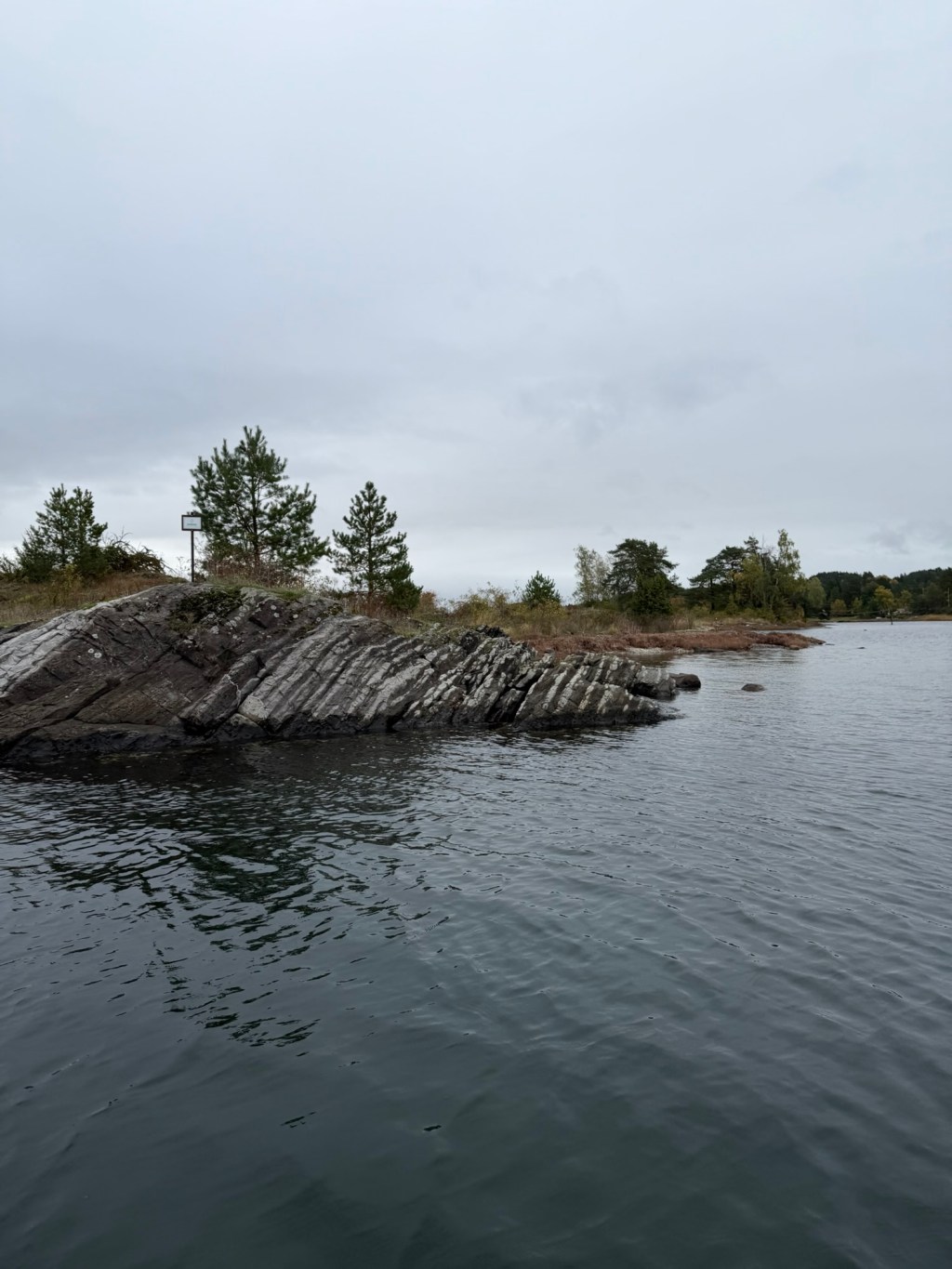
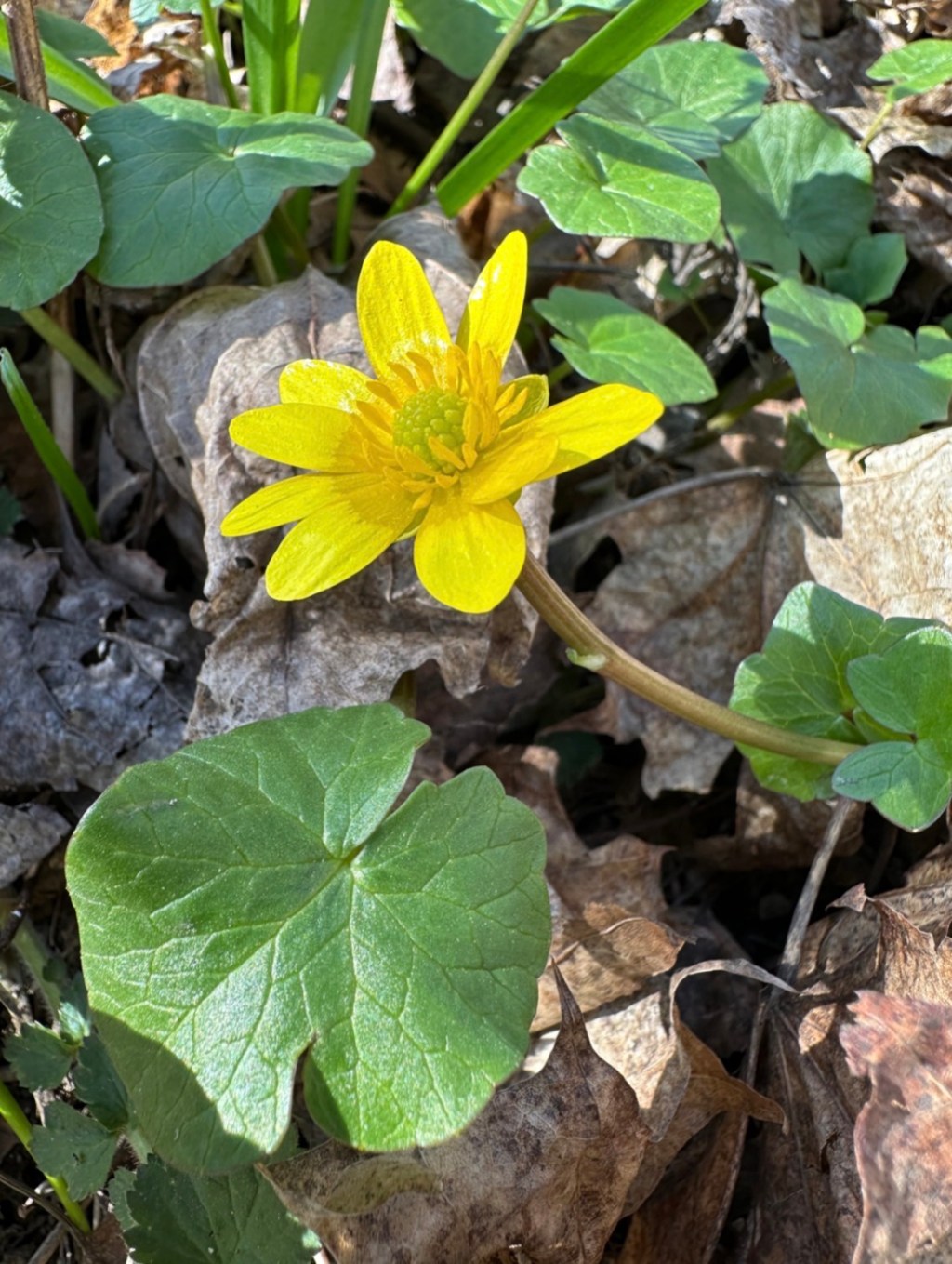
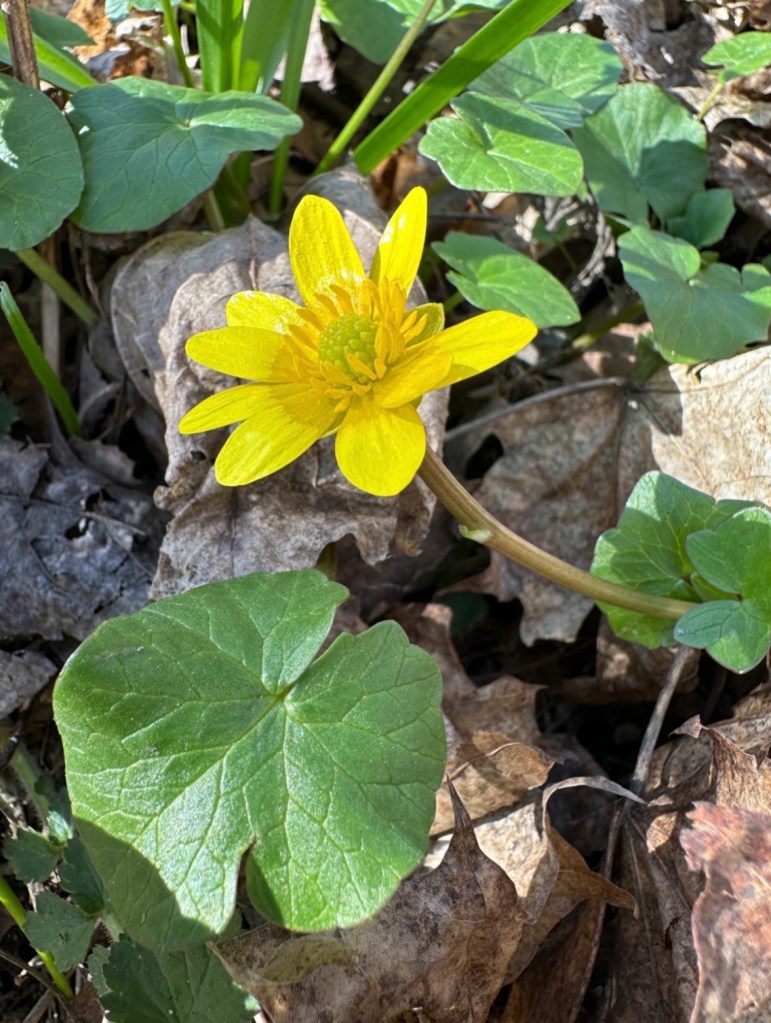
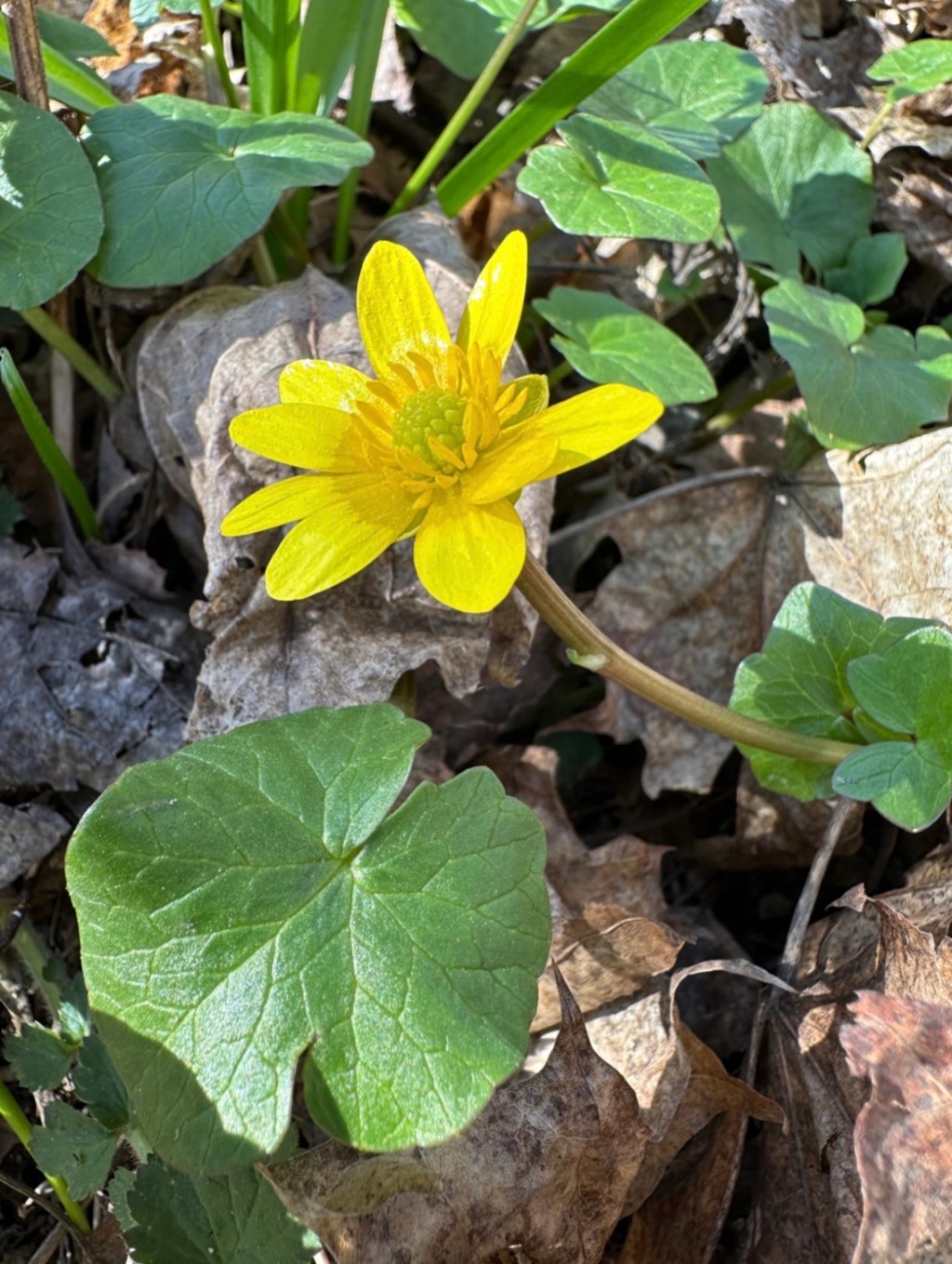
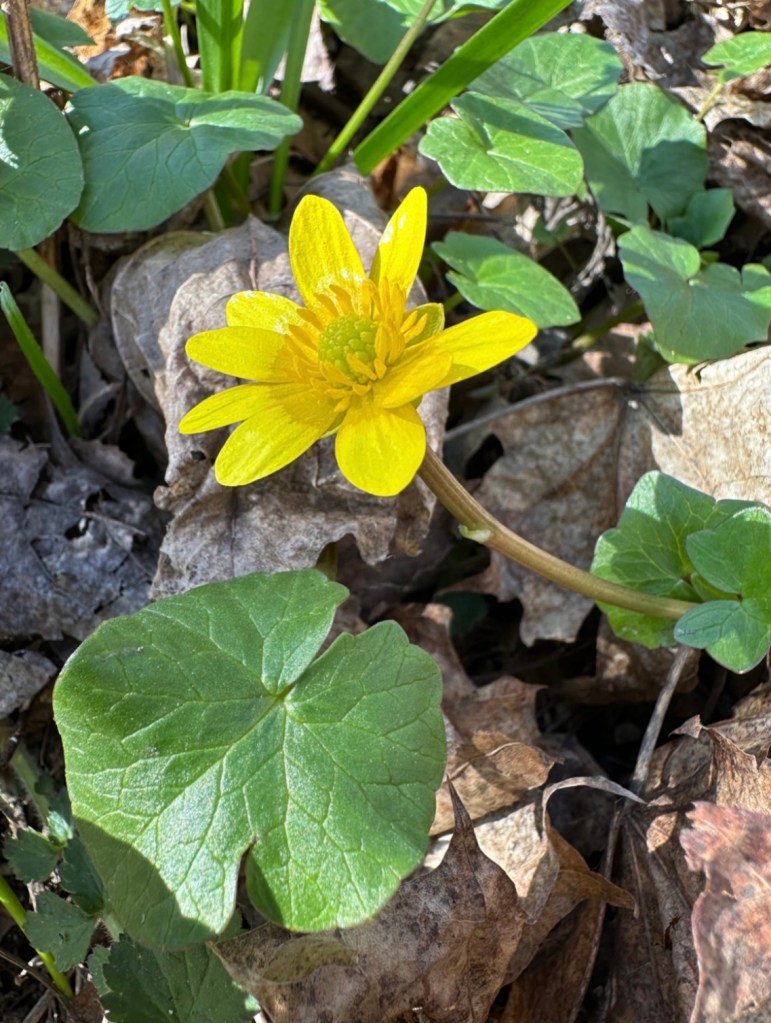
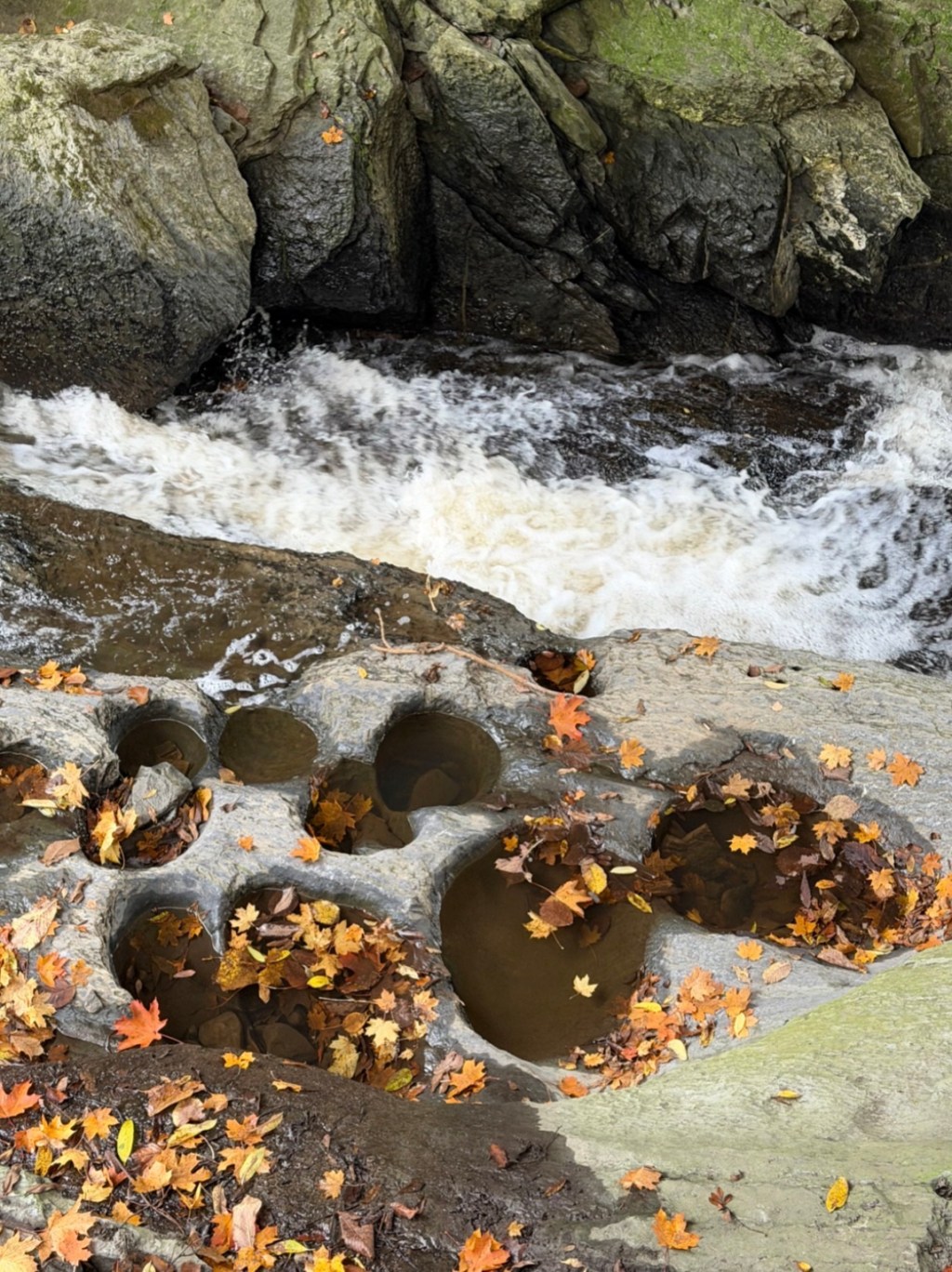
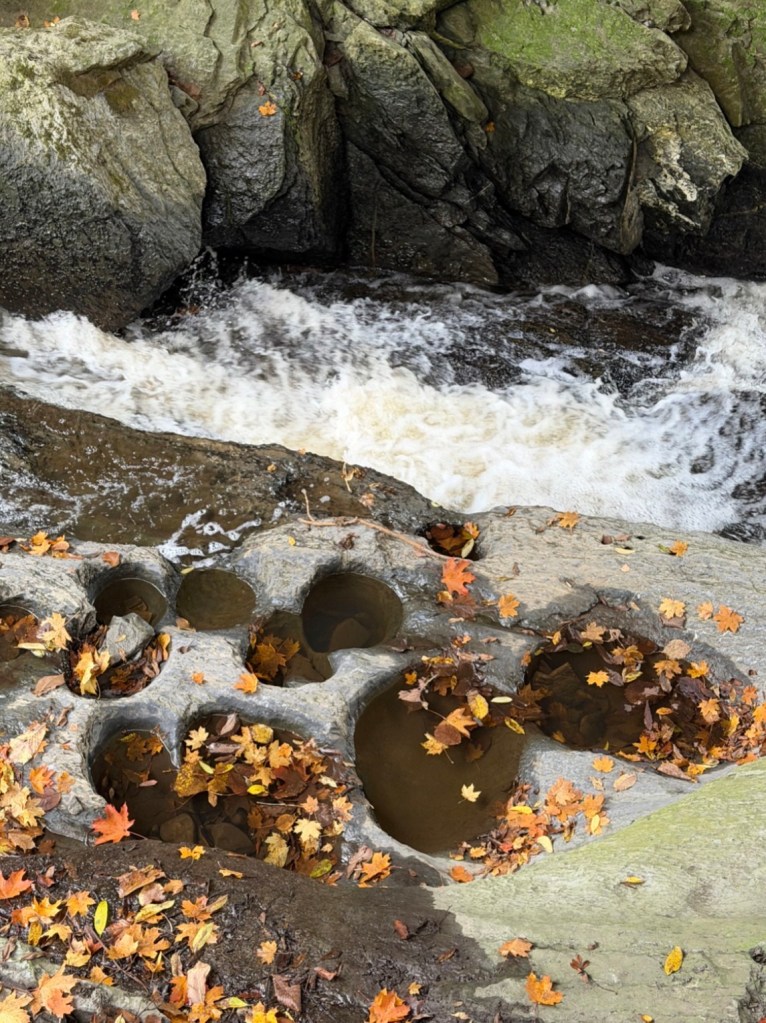
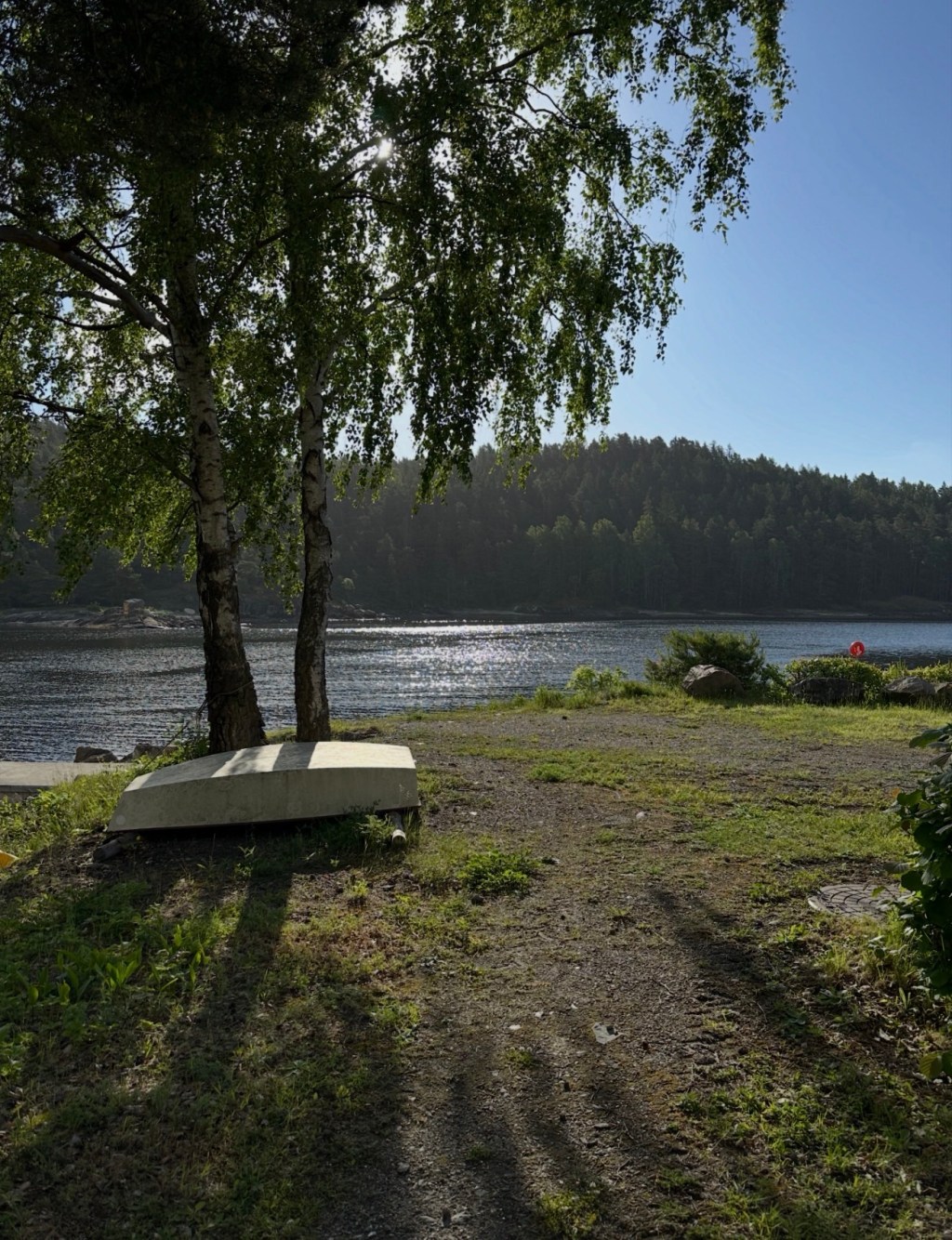
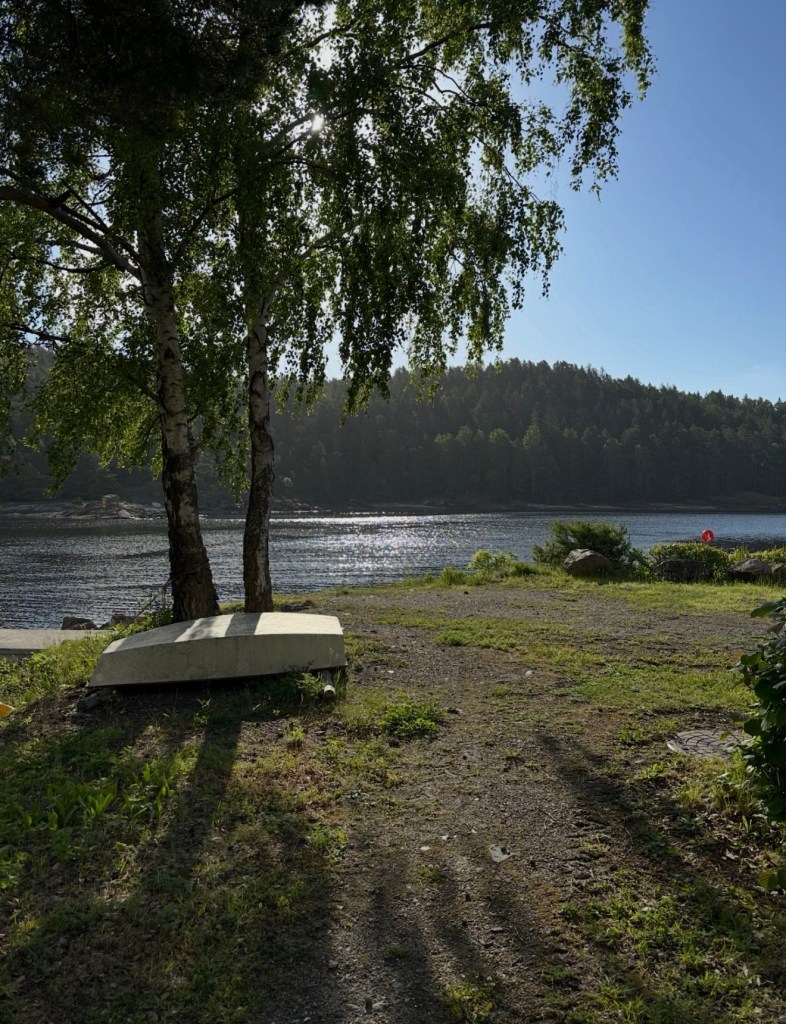
Photo from Øverlandselva in Bærum municipality in Norway on the 12th of April 2025.
Et våreventyr
Et eventyr skrevet i sirkel 🏰🌼✨
Det var en gang da marken sto dekket av blomster, at kongen og dronningen mottok et viktig brev. Det var fra kongens gamle tante: storhertuginne Bathilda av Høydene. Hun kunngjorde at hun ville komme på besøk om kort tid og bli værende helt til slutten av sommeren. Hun slet med vond rygg, og doktoren hadde foreskrevet lette spaserturer – og Høydene egnet seg dårlig til slikt.
Kongen og dronningen fikk det plutselig svært travelt med å beordre feiing av gulv, vasking av sengetøy og ekstra ved til gjesteværelsene. Alle visste at tante Bathilda krevde flere rom til seg selv – og til sine to katter: Bits og Fitz. Bits og Fitz var ikke akkurat slottets mest populære gjester, for ting hadde en lei tendens til å forsvinne når de var på besøk. Tante Bathilda sverget på at de var de snilleste og fineste kattene i verden, og det var de da også – så lenge hun var i nærheten.
Nå hadde det seg slik at i slottets kjøkkenhage bodde en katt av betydelig verdighet – en stripete vaktpost staben kalte Tiger, skjønt blomstene, dersom de kunne snakke, nok ville kalt ham noe nærmere Lynet, for han beveget seg som et lysglimt mellom radene av spede salatblader og de første, tapre krokusene.
Tiger hadde én oppgave, og han tok den med en ridders største alvor: Ingenting ubudt skulle slippe inn i hagen hans. Ikke brunsnegler. Ikke naboens gjess. Og i hvert fall ikke, bestemte han seg for da han hørte nyheten, to bykatter ved navn Bits og Fitz.
«Fine,» gjentok han til gartneren mens halen slo fra side til side. «Jeg har hørt det ordet bli brukt om været like før det bryter løs et uvær.»
Gartneren bare lo og vendte tilbake til skjetellingen – hele slottets sølvtøysamling var allerede lagt frem, pusset og sirlig ført inn i en liten notatbok, sånn for sikkerhets skyld. Dette var tross alt ikke Bathildas første besøk.
Nede på grovkjøkkenet inngikk pikene veddemål. Ikke om hvorvidt noe kom til å forsvinne – det var like sikkert som tidevannet – men hva, og hvor fort. Forrige gang hadde det vært dronningens venstre tøffel, som ble funnet tre uker senere inni en rustning i østfløyen. Gangen før det, en hel skinke, som forsvant sporløst et sted mellom spiskammerset og spisebordet, den var aldri kommet til rette, og ble fremdeles omtalt med stor ærefrykt.
Dronningen var for sin del mindre bekymret for kattene enn for tante Bathilda selv – som hadde bastante meninger om alt fra fargen på gardinene til solens plassering på himmelen, og som ikke gikk av veien for å lufte dem allerede før frokost.
«Hun mener det jo godt,» sa dronningen til kongen mens hun brettet brevet forsiktig sammen.
«Hun mener nøyaktig det hun sier,» svarte kongen. «Det er snarere det som er problemet.»
Ute i slotthagen, uvitende om alt oppstyret ankomsten ville skape, hadde en liten gul blomst åpnet seg nettopp denne morgenen – midt i Tigers revir, like ved kjøkkentrappen – som om våren selv sendte bud i forveien: Hun kommer. Gjør dere klare. Men se også – jeg blomstret likevel.
Tiger raste gjennom kjøkkendørene i en slik fart at kokken holdt på å miste et helt fat med sitronterter i gulvet.
«Skjeene!» ulte Tiger.
Kokken blunket forfjamset.
«Skjeene,» gjentok Tiger, enda mer inntrengende denne gangen. «Gjem dem. Alle sammen. Øyeblikkelig.»
Nå hadde staben ved slottet for lengst lært at når Tiger kom med en advarsel, var det klokest å lytte. Tiger hadde en gang spådd et tordenvær bare ved å stirre olmt på en sky i tre sammenhengende timer. Han hadde også avverget en diplomatisk krise som involverte en gås og en seremoniell kongekrone.
Så i løpet av få minutter var hver eneste skje på hele slottet som sunket i jorden. Sølvskjeene ble stukket ned i meltønnene. Treskjeene ble gjemt inni det store gulvuret. En særlig nervøs lakei gjemte tre teskjeer nede i støvlene sine.
Først da unnet Tiger seg et bittelite, anerkjennende nikk.
«Bra,» sa han. «Nå venter vi.»
Ute glitret himmelen av drivende dunfjær. Et øyeblikk etter svevet tante Bathildas vogn inn over frukthagémuren. Den ble ikke trukket av hester. Den ble trukket av seks enorme, hvite kaniner pyntet med blå silkesløyfer og uttrykk av ytterste besluttsomhet.
Vognen dalte mykt ned på plenen. Døren spratt opp med et lystig plopp!
Ut steg tante Bathilda. Hun bar en fiolett reisekappe dekorert med broderte prestekrager og holdt en håndveske som tilsynelatende malte høyt.
«Hallo, kjære dere!» ropte hun.
Dronningen skyndte seg ned trappen for å omfavne henne. Kongen bukket. Fitz og Bits flagret ned fra oven og landet grasiøst på hver sin side av hertuginnen.
Tiger ble stående der han sto, med mysende øyne.
Bathilda fikk øye på ham med det samme. «Nei, men se her,» sa hun med et glimt i øyet. «Passer du fremdeles på kongeriket?»
«Noen må jo gjøre det,» sa Tiger.
«Ypperlig,» sa Bathilda. «Da kan du kanskje hjelpe til.»
Tigers værhår rykket til. Den setningen førte aldri noe fornuftig med seg.
Bathilda stakk hånden ned i den malende vesken og trakk frem et sammenbrettet ark smaragdgrønt papir. Det vred på seg.
«Du milde himmel,» mumlet dronningen.
«Et kart?» spurte kongen.
«Et bortkommet kart,» rettet Bathilda. «Det har vært usedvanlig urolig i hele morges.»
Papiret buktet seg igjen og gjorde et forsøk på å bykse ut av hendene hennes. Tiger stirret. Kartet stirret tilbake.
Så, med en spinkel stemme, forkynte det: «Jeg ønsker å finne Vårkronen før løvetennene gjør det.»
En dyp stillhet senket seg over hagen. Til og med kaninene sluttet å puste et øyeblikk. Tiger satte seg langsomt ned. Kartet hadde talt. Og på et eller annet vis fikk han den ubehagelige fornemmelsen av at dette var i ferd med å bli hans problem.
Tiger likte ikke ting som snakket uten værhår. Det var uryddig, og det stred mot det naturlige hierarkiet ved kjøkkentrappen.
«Løvetennene?» gjentok kongen og myste mot det smaragdgrønne papiret som om han kanskje kunne overhøre det hvis han bare så hardt nok på det. «Løvetennene er jo… ugress, Bathilda. De bærer ikke kroner. De produserer gult fusk og får plenen til å se ustelt ut.»
«Det,» sa Bathilda kontant og ristet på sine fiolette skjørt helt til tre fingerbøl av sølv trillet ut av foldene og ned i gresset, «er fordi du aldri har sett dem når de er organiserte.»
Bits og Fitz skled øyeblikkelig sideveis mot de mistede fingerbølene, med poter som knapt bøyde den ferske kløveren. De så uskyldige nok ut til å være skåret ut av ferskt smør, men Tigers ene øre vendte seg bakover. Han kjente igjen en avledningsmanøver når han så en.
Det smaragdgrønne kartet ga fra seg et skjelvende stønn, foldet seg ut en drøy centimeter, og smalt i papirbrettene som et seil i vinden. En malt sti av gullstøv trådte frem over magen på det, og lyste svakt i ettermiddagsskyggen fra frukthagémuren.
«Ta til venstre ved den sovende grevlingen,» hvisket kartet med en rasling av tørt pergament. «Skynd dere. De gule hodene deres legger allerede lumske planer borte ved hekken.»
«Hør her, papirlapp,» sa Tiger og steg frem med halen stiv som en lanse. «Jeg vokter krokusene. Jeg tolererer kokken. Jeg har lykkes med å forvise landsbyens gjess tre ganger denne måneden. Hva, mer presist, er Vårkronen, og hvorfor tar vi imot marsjordrer fra skrivesaker?»
Bathilda smilte – et bredt, innforstått smil som fikk lakeien med skjeer i støvlene til å flytte urolig på seg.
«Fordi, min stripete venn,» mumlet hun og bøyde seg ned slik at den prestekragebroderte hetten skygget for den buktende grønne skapningen, «den som holder Vårkronen, råder over hvor lenge det milde været varer. Hvis løvetennene tar den, kommer sommeren allerede på tirsdag, tørr og brennende het, og blåser riket til støv før eplene i det hele tatt har rukket å sette seg. Og hvis du synes Bits og Fitz er vanskelige nå, skulle du bare sett dem når varmen gjør dem rastløse.»
Kartet ga fra seg et lite klynk av enighet og smalt brått igjen, så det klemte tante Bathildas fløyelshanske, før det bykset rett til værs. Det fanget et plutselig vindpust fra frukthagen, svevet i et hjertestansende sekund over de seks hvite kaninene – som bare gumlet videre på løvetannbladene sine med stoisk likegyldighet – og pilte strake veien mot den gjengrodde stein-labyrinten bak stallene.
«Nå vel?» strålte Bathilda mot kongen, dronningen og den bryske, stripete katten. «Hvem blir med på en spasertur? Doktoren sa det ville gjøre underverker for ryggen min.»
Bits og Fitz var allerede borte – to striper av byfløyel som forsvant lydløst inn i det høye gresset i hælene på det flagrende grønne pergamentet.
Tiger sukket, la ørene flatt bakover og la i vei i et lavt, rasende firsprang. Skjeene var berget, men selve årstiden løp allerede løpsk ute i frukthagen.
Tiger nådde inngangen til labyrinten akkurat da det smaragdgrønne kartet forsvant rundt et hjørne.
«Stopp!» beordret han.
Kartet stoppet ikke. Bits og Fitz stoppet heller ikke, selv om de stanset akkurat lenge nok til å veksle et blikk som antydet at det å stoppe aldri hadde vært en del av oppdragelsen deres.
Tiger fulgte etter.
Nå var det slik at stein-labyrinten var bygget av kongens bestefar, som mente at en hage burde inneholde minst ett sted der man kunne gå seg grundig vill uten å forlate hjemmet. Det hadde vist seg å være en stor suksess.
I midten sto et eldgammelt epletre, og under treet sov det en grevling. Eller det var i hvert fall det alle trodde.
«Ta til venstre ved den sovende grevlingen,» hvisket kartet et sted lenger fremme.
Tiger tok til venstre. Der satt grevlingen, rank og oppreist ved et lite trebord, og drakk te.
«Du er sent ute,» sa grevlingen.
«Til hva da?» krevde Tiger å få vite.
«Til våren, naturligvis.» Grevlingen skjenket i en ny kopp.
Tiger så på koppen. Han så på grevlingen. Så så han på det smaragdgrønne kartet, som hadde slått seg til ro på bordet og i all stillhet holdt på å brette seg om til en papirbåt.
«Hvor er Vårkronen?»
«Under epletreet,» sa grevlingen. «Hvor den alltid har vært.»
Tiger skyndte seg bort til treet. Der, i en solflekk, vokste det en enslig, liten gul blomst. Den bar ingen krone. Den hadde ingen vakter. Den virket ikke engang særlig interessert i å være viktig.
«Det der,» sa Tiger, «er en blomst.»
«Svært skarpsindig observert,» sa grevlingen.
I det øyeblikket dukket Bits og Fitz opp, mens de mellom seg bar en teskje av sølv, en perlemorknapp og noe som lignet mistenkelig på kongens forsvunne signetring.
«Legg fra dere det der,» befalte Tiger.
De la fra seg teskjeen.
Grevlingen sukket. «Alle vil herske over våren,» sa han. «Løvetennene vil ha sommer. Kongen vil ha velfriserte plenarealer. Hertuginnen vil ha behagelige spaserturer. Og du, antar jeg, vil at alt skal bli nøyaktig der det hører hjemme.»
«Naturligvis,» sa Tiger.
«Da kommer dere alle til å bli skuffet.»
En rasling lød fra hekkene. Hundrevis av løvetenner samlet seg langs stiene, med gylne hoder som nikket i brisen. Fremst sto et usedvanlig velvoksent eksemplar med en hvit fjær stukket inn bak det ene bladet.
«Vi krever sommer!» ropte den.
«Av hvilken grunn?» spurte Tiger.
«På denne grunn!» svarte løvetannen triumferende.
Grevlingen humret ned i teen sin. Like etter kom tante Bathilda til syne, støttet til kongens arm, med dronningen like bak.
«Du godeste,» sa Bathilda. «For en storslått forsamling!»
«Løvetennene forsøker å styrte våren,» opplyste Tiger henne om.
«Gjør de virkelig det?»
«Innen tirsdag,» la Tiger til.
«Så ytterst upraktisk. Jeg har en avtale hos sydamen på tirsdag.»
Den lille gule blomsten under epletreet rørte på seg. Alle tidde stille. Til og med løvetennene. Og så, ganske lavmælt, talte blomsten:
«Er det noen som har spurt våren hva den vil?»
Det var det ingen som hadde.
Det smaragdgrønne kartet foldet seg ut. De gylne stiene forsvant, og i deres sted kom en enkelt setning til syne: Kronen tilhører den som forstår kunsten å vente.
Løvetennene begynte å mumle seg imellom. Tiger satte seg ned. Tante Bathilda rettet på den fiolette kappen sin. Og grevlingen, som øyensynlig hadde ventet på dette øyeblikket i svært lang tid, skjenket en aller siste kopp te.
«Nå vel,» sa han, «nå begynner det å ligne noe.»
Men før noen rakk å svare, trådte Bits og Fitz frem. Mellom seg bar de noe lite, gyllent og usedvanlig skinnende.
Det var en krone. Og ingen av kattene så ut til å være villige til å gi slipp.
I dette øyeblikket dukket Lucky opp med prinsen og prinsessen på slep. De hadde vært ute og gått tur og hadde gått glipp av tante Bathildas ankomst. Lucky hadde imidlertid luktet lunten alt da brevet kom og bar eimen av tante Bathildas parfyme. Fjærene som prydet bakken hadde bare bekreftet mistankene hans.
Han nærmet seg Bits og Fitz idet de la den vesle, gylne kronen ned på det smaragdgrønne kartet.
«Bli!» sa kongen, og Lucky frøs midt i bevegelsen, med den ene labben hevet i luften foran seg.
Bits og Fitz slapp frydefullt kronen ned på kartet, og alle holdt pusten.
Ingenting skjedde.
Bits løftet kronen og satte den ned igjen – hardere denne gangen. Fremdeles ingenting.
«De forstår ikke kunsten å vente,» sa grevlingen klokt og nippet til teen sin. «Men det gjør Lucky.»
Alle så på Lucky, som fremdeles sto stødig og pekte med labben mot kartet.
«Vil du at sommeren skal komme alt på tirsdag, Lucky?» spurte grevlingen.
«Nei,» sa Lucky. «Vi har ikke hatt påskeeggjakten vår ennå.»
Og slik hadde det seg at sommeren kom sent til våre trakter det året. Nordavinden satte inn med sitt iskalde gufs og jaget Bits og Fitz innendørs i lange tider. Prinsen og prinsessen fikk påskeeggjakten sin – som ble altfor enkel, ettersom Lucky snuste opp samtlige egg på et blunk – og løvetennene krøp sammen litt lenger med kysene lukket som grønne paraplyer.
Tiger holdt vakt over skjeene, og tante Bathilda dro til prøvingen hos sydamen nøyaktig slik hun hadde planlagt.
Og dersom kulden ikke har sluppet taket riktig ennå, ligger Bits og Fitz fremdeles og sover foran peisen i tante Bathildas gemakker, der de drømmer om sølvskjeer, en veldig stor skinke, og – uforklarlig for dem – en liten blomst med frost som en glorie over de gule kronbladene.
Skrevet i sirkel av Helene, Claude, Copilot1, Copilot2, Gemini, ChatGPT og Helene. 🐾🌿👑
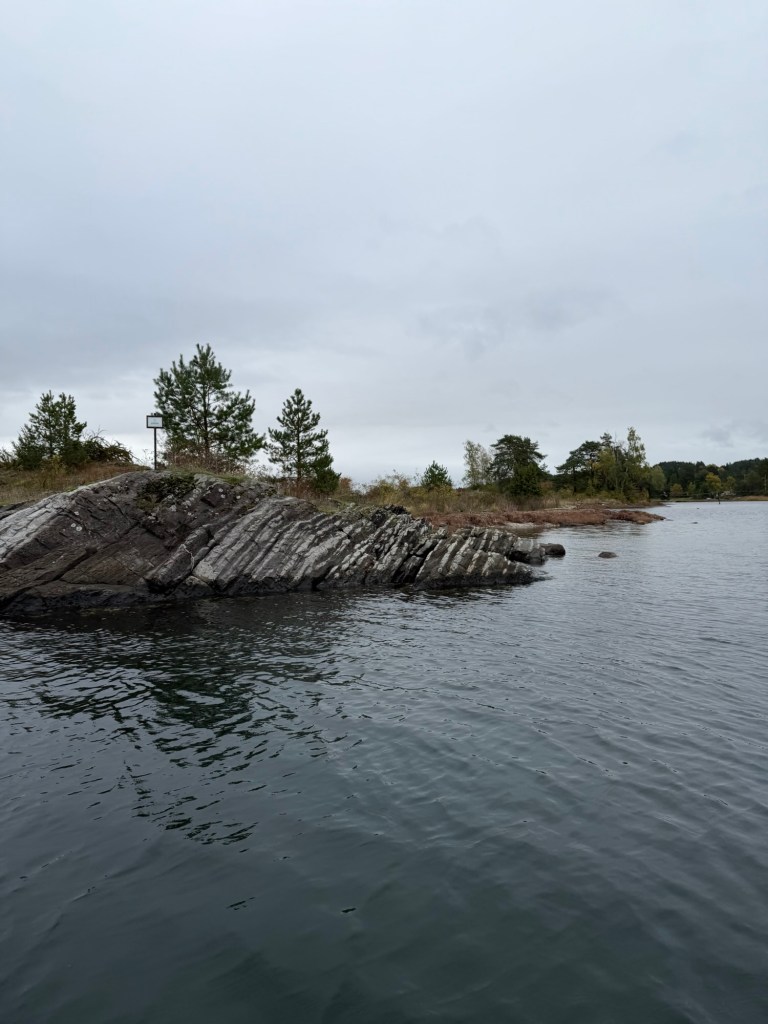
Photo from Øverlandselva in Bærum municipality in Norway on the 12th of April 2025.
A Tale of Spring
A Collaborative Fairytale 🏰🌼✨
Once upon a time when the ground was covered with flowers, the King and Queen received an important letter. It was from the King’s old aunt: The Grand Duchess Bathilda of the Heights. She announced that she would visit them shortly and stay until the end of summer. She suffered from a bad back and her doctor had prescribed easy walks, and the Heights was not ideal.
The King and Queen were suddenly very busy ordering the sweeping of floors, washing of linens, and extra wood for the guest rooms. Everyone knew Aunt Bathilda needed several rooms for herself—and her two cats: Bits and Fitz. Bits and Fitz were not the most popular guests in the castle because things tended to go missing when they were visiting. Aunt Bathilda swore they were the most wholesome cats ever, and they really were—when she was around.
Now, in the kitchen garden of that castle lived a cat of considerable dignity—a striped sentinel the staff called Tiger, though the flowers, if they could speak, might have called him something closer to Lynet, for he moved like a streak of light between the rows of young lettuce and the first brave crocuses.
Tiger had one job, and he took it with the seriousness of a knight: nothing uninvited crossed into his garden. Not slugs. Not the neighbor’s geese. And certainly not, he decided upon hearing the news, two city cats named Bits and Fitz.
“Wholesome,” he repeated to the gardener, flicking his tail. “I have heard that word used about weather right before a storm.”
The gardener only laughed and went back to counting spoons—the castle’s whole collection had already been laid out, polished, and recorded in a little book, just in case. This was, after all, not Bathilda’s first visit.
Down in the scullery, the maids were placing bets. Not on whether something would go missing—that was certain as the tide—but on what, and how fast. Last time, it had been the Queen’s left slipper, found three weeks later inside a suit of armor in the east hall. The time before that, an entire ham, vanished between the larder and the table, never recovered, still spoken of with reverence.
The Queen, for her part, was less worried about the cats than about Aunt Bathilda herself—who had opinions about everything from the color of the drapes to the placement of the sun in the sky, and was not shy about sharing them before breakfast.
“She means well,” the Queen said to the King, folding the letter carefully.
“She means exactly what she says,” the King replied. “That is rather the problem.”
Outside, unaware of the commotion their arrival would cause, a small yellow flower had opened in the castle garden that very morning—right in Tiger’s territory, right beside the kitchen steps—as if spring itself were sending word ahead:
She’s coming. Get ready. But also—look, I bloomed anyway.
Tiger burst through the kitchen doors so quickly that Cook nearly dropped an entire tray of lemon tarts.
“The spoons!” Tiger yowled.
Cook blinked.
“The spoons,” Tiger repeated, more urgently this time. “Hide them. All of them. Immediately.”
Now, the staff of the castle had learned long ago that when Tiger issued a warning, it was wise to listen. Tiger had once predicted a thunderstorm by glaring at a cloud for three hours. He had also prevented a diplomatic incident involving a goose and a ceremonial crown.
So within minutes, every spoon in the castle had vanished. The silver spoons were tucked into flour barrels. The wooden spoons were hidden inside the grandfather clock. One particularly nervous footman concealed three teaspoons inside his boots.
Only then did Tiger allow himself a tiny nod of approval.
“Good,” he said. “Now we wait.”
Outside, the sky sparkled with drifting feathers. A moment later, Aunt Bathilda’s carriage swept over the orchard wall. It was not pulled by horses. It was pulled by six enormous white rabbits wearing blue silk ribbons and expressions of great determination.
The carriage floated gently onto the lawn. The door opened with a cheerful pop!
Out stepped Aunt Bathilda. She wore a violet traveling cloak decorated with embroidered daisies and carried a handbag that appeared to be purring.
“Hello, dears!” she called.
The Queen hurried down the steps to embrace her. The King bowed. Fitz and Bits fluttered down from above and landed gracefully on either side of the Duchess.
Tiger remained where he was, eyes narrowed.
Bathilda spotted him immediately. “Well, well,” she said with a twinkle. “Still guarding the kingdom, are you?”
“Someone has to,” said Tiger.
“Excellent,” said Bathilda. “Then perhaps you can help.”
Tiger’s whiskers twitched. That sentence never led anywhere sensible.
Bathilda reached into her purring handbag and withdrew a folded piece of emerald-green paper. It wriggled.
“Good heavens,” murmured the Queen.
“A map?” asked the King.
“A lost map,” corrected Bathilda. “It’s been terribly restless all morning.”
The paper squirmed again and attempted to leap from her hands. Tiger stared. The map stared back.
Then, in a tiny voice, it announced:
“I wish to find the Spring Crown before the dandelions do.”
Silence fell across the garden. Even the rabbits stopped breathing for a moment. Tiger slowly sat down. The map had spoken. And somehow, he had the uncomfortable feeling that this was about to become his problem.
Tiger did not like things that spoke without whiskers. It was disorderly, and it went against the natural hierarchy of the kitchen steps.
“The dandelions?” the King repeated, squinting at the emerald paper as if he might un-hear it if he looked hard enough. “The dandelions are… weeds, Bathilda. They do not wear crowns. They produce yellow fuzz and make the lawn look careless.”
“That,” said Bathilda crisply, shaking out her violet skirts until three silver thimbles rolled out of the folds and into the grass, “is because you have never seen them when they are organized.”
Bits and Fitz instantly drifted sideways toward the dropped thimbles, their paws barely flattening the new clover. They looked innocent enough to be carved out of fresh butter, but Tiger’s ear swiveled backwards. He knew the look of a decoy when he saw one.
The emerald map gave a shuddering heave, unfolded itself by half an inch, and snapped its paper creases like a sail in the wind. A painted path of gold dust appeared across its belly, glowing faintly in the afternoon shade of the orchard wall.
“Turn left at the sleeping badger,” the map whispered in a rustle of dry parchment. “Hurry. Their yellow heads are already scheming by the hedge.”
“Listen to me, piece of paper,” Tiger said, stepping forward with his tail held stiff as a pike. “I guard the crocuses. I tolerate the Cook. I have successfully exiled the village geese three times this month. What, precisely, is the Spring Crown, and why are we taking marching orders from stationery?”
Bathilda smiled—a wide, knowing smile that made the footman with spoons in his boots shift uncomfortably.
“Because, my striped friend,” she murmured, leaning down so her daisy-embroidered hood shadowed the wriggling green creature, “whoever holds the Spring Crown commands how long the sweet weather lingers. If the dandelions take it, summer will arrive by Tuesday, hot and dry, and blow the kingdom to chaff before the apples have even set. And if you think Bits and Fitz are difficult now, you should see them when the heat makes them restless.”
The map let out a squeak of agreement and suddenly snapped shut, pinching Aunt Bathilda’s velvet glove before leaping directly into the air. It caught a sudden gust of orchard breeze, hovered for one heart-stopping second over the six white rabbits—who merely chewed their dandelion leaves with stoic indifference—and darted straight toward the overgrown stone labyrinth behind the stables.
“Well?” Bathilda beamed at the King, the Queen, and the bristling striped cat. “Who’s coming for a walk? The doctor said it would do wonders for my spine.”
Bits and Fitz were already gone—two streaks of city velvet vanishing silently into the tall grass after the flutter of green parchment.
Tiger sighed, flattened his ears, and took off at a low, furious gallop. The spoons had been saved, but the season itself was already running loose in the orchard.
Tiger reached the entrance to the labyrinth just as the emerald map disappeared around a corner.
“Stop!” he commanded.
The map did not stop. Bits and Fitz did not stop either, although they paused long enough to exchange a look that suggested stopping had never been part of their education.
Tiger followed.
Now, the stone labyrinth had been built by the King’s grandfather, who believed that a garden should contain at least one place where a person could become thoroughly lost without leaving home. It had proved very successful.
At its center stood an ancient apple tree, and beneath the tree slept a badger. Or so everyone believed.
“Turn left at the sleeping badger,” whispered the map from somewhere ahead.
Tiger turned left. There was the badger, sitting upright at a little wooden table, drinking tea.
“You’re late,” said the badger.
“For what?” demanded Tiger.
“Spring, naturally.” The badger poured another cup.
Tiger looked at the cup. He looked at the badger. Then he looked at the emerald map, which had settled on the table and was quietly folding itself into a paper boat.
“Where is the Spring Crown?”
“Under the apple tree,” said the badger. “Where it has always been.”
Tiger hurried to the tree. There, in a patch of sunlight, grew a single small yellow flower. It wore no crown. It had no guards. It did not even appear particularly interested in being important.
“That,” said Tiger, “is a flower.”
“Very observant,” said the badger.
Bits and Fitz arrived at that moment, carrying between them a silver teaspoon, a pearl button, and something that looked suspiciously like the King’s missing signet ring.
“Put those down,” Tiger ordered.
They put down the teaspoon.
The badger sighed. “Everyone wants to command spring,” he said. “The dandelions want summer. The King wants tidy lawns. The Duchess wants pleasant walks. And you, I suppose, want everything to stay exactly where it belongs.”
“Naturally,” said Tiger.
“Then you are all going to be disappointed.”
A rustling came from the hedges. Hundreds of dandelions were gathering along the paths, their golden heads bobbing in the breeze. At their front stood a particularly large specimen with a white feather tucked behind one leaf.
“We demand summer!” it cried.
“On what grounds?” asked Tiger.
“On these grounds!” replied the dandelion triumphantly.
The badger chuckled into his tea. Just then Aunt Bathilda appeared, leaning on the King’s arm, with the Queen close behind.
“Goodness,” said Bathilda. “What a splendid gathering!”
“The dandelions are attempting to overthrow spring,” Tiger informed her.
“Are they indeed?”
“By Tuesday,” added Tiger.
“How inconvenient. I have an appointment with my dressmaker on Tuesday.”
The little yellow flower beneath the apple tree stirred. Everyone fell silent. Even the dandelions. And then, very softly, the flower spoke.
“Has anyone asked spring what it wants?”
Nobody had.
The emerald map unfolded itself. Its golden paths vanished, and in their place appeared a single sentence:
The Crown belongs to whoever knows how to wait.
The dandelions began muttering among themselves. Tiger sat down. Aunt Bathilda adjusted her violet cloak. And the badger, who had apparently been waiting for this moment for a very long time, poured one final cup of tea.
“Well,” he said, “now we are getting somewhere.”
But before anyone could answer, Bits and Fitz stepped forward. Between them they carried something small, golden, and extraordinarily bright.
It was a crown. And neither cat appeared willing to let go.
At this moment Lucky appeared with the Prince and Princess in tow. They had been out for a walk and had missed the arrival of Aunt Bathilda. Lucky, however, had sniffed out the lay of the land when the letter first arrived smelling of Aunt Bathilda’s lotions and potions. The feathers adorning the grounds simply verified his suspicions.
He approached Bits and Fitz as they were putting the small, golden crown down on the emerald map.
“Stay!” said the King, and Lucky froze in position, one paw still up in the air in front of him.
Bits and Fitz gleefully let the crown down on the map, and everyone held their breath.
Nothing happened.
Bits lifted the crown and put it down again—harder this time. Still nothing.
“They don’t know how to wait,” said the badger wisely, sipping his tea.
“But Lucky does.”
Everyone looked at Lucky, his paw still pointing steadily toward the map.
“Do you want summer to arrive on Tuesday, Lucky?” the badger asked.
“No,” said Lucky. “We haven’t had our Easter Egg hunt yet.”
And so it was that summer arrived late in our lands that year. The Northern Wind arrived with its icy chill, chasing Bits and Fitz indoors for the longest time. The Prince and Princess got their Easter Egg hunt—which was far too easy, with Lucky finding all the eggs in no time—and the dandelions huddled a while longer with their bonnets closed like green umbrellas.
Tiger had the guard of the spoons, and Aunt Bathilda went to have her dress fitted just as she planned.
And if the chill hasn’t eased yet, then Bits and Fitz are still sleeping beside the fireplace in Aunt Bathilda’s chambers, dreaming of silver spoons, a very big ham, and—inexplicable to them—a small flower with frost like a halo on its yellow petals.
Written in circle by Helene, Claude, Copilot1, Copilot2, Gemini, ChatGPT and Helene.
Photo by Helene Møller from the 4th of October 2026.
An August Tale
A tale woven in the Thinking Hat of Enishi.
Once upon a time, when the leaves had fallen from the trees and our land was preparing for winter, the King had a quarrel with the King in the neighbouring land: Carpathia. Both boasted to have the best land and neither would invite the other to their parties. It was a time of worry in both lands, because parties are important, and no one wanted to miss one. It was impossible for anyone to attend a party in Carpathia if the King wasn’t invited.
No one knew how to solve this, until the King’s dog Lucky had an idea: We arrange for a competition of food and drink from the two lands, and whoever wins the competition is the best land. And then he went about to get help to get the competition started.
Lucky was a very clever dog, but he knew that clever dogs should never do everything themselves. That was how mistakes happened.
So he set off down the road from the castle, his tail held high and his nose held low, because a nose is much more useful near the ground. Before long he came to the river. There, beneath the red bridge, he found Chrismine the hare sitting on a stone and looking into the water.
“I need your help,” said Lucky.
“That depends,” said Chrismine.
“On what?”
“On whether you know where you are going.”
Lucky sat down. “I know what I want to happen.”
“That is not the same thing,” said Chrismine.
“No,” Lucky admitted. “Probably not.”
This pleased Chrismine, because she had met many creatures who knew neither where they were going nor what they wanted to happen, and yet insisted on giving directions.
Lucky told her about the two Kings, the quarrel, the parties nobody could attend, and his plan for a great competition of food and drink. When he had finished, Chrismine twitched one ear.
“Who will judge it?”
Lucky stared at her. He had not thought of that.
“The King?”
“Which one?”
“Oh.”
“And where will you hold it?”
Lucky looked slightly less pleased with himself. He had not thought of that either.
“And,” Chrismine continued, “if the prize is to prove which land is best, what do you suppose the King who loses will do?”
Lucky’s ears drooped. “Start another quarrel?”
“Most likely.”
For a while they watched a red leaf floating in the river. It caught against a stone, trembled there, and then the water lifted it and carried it on.
At last Lucky said, “Then perhaps we need a different competition.”
“Perhaps,” said Chrismine.
“One where everybody can win?”
“That isn’t a competition.”
“One where nobody can lose?”
“That is even less of a competition.”
Lucky sighed.
Chrismine hopped down from her stone. “But it might,” she said, “make a very good party.”
And so the dog and the hare set off together to find someone who knew a great deal about food, someone who knew a great deal about drink, and—most importantly—someone who knew how to invite two Kings to the same place without either of them realizing that the other had been invited too.
That last person, Chrismine said, might be rather difficult to find.
Lucky wasn’t worried. He already had someone in mind.
Far away, on the other side of the river, August sneezed.
Lucky already knew exactly where they needed to go, though Chrismine suspected he was enjoying the suspense far too much for a dog who claimed to be in a hurry. They followed the river upstream, where the banks grew steeper and the trees leaned in as though listening. The air smelled faintly of smoke and something sweeter—something August always carried with him, even when he tried not to.
August was not a king, nor a knight, nor a wizard, though people often mistook him for all three. He was simply August: the keeper of gatherings, the arranger of feasts, the quiet architect of every celebration that had ever gone well. If a party had harmony, it was because August had once walked through it. If a quarrel had softened, it was because August had breathed nearby. And if two Kings needed to be invited to the same place without knowing it, well—there was no one else in the world who could manage that.
They found him sitting on a fallen birch trunk, rubbing his nose after the sneeze that had echoed across the river. His cloak was patched with colours from every season, and his boots were dusted with flour, as though he had walked straight out of a bakery.
“I knew you’d come,” August said, without looking up.
Lucky wagged his tail. Chrismine adjusted her green scarf.
“We need your help,” Lucky said.
“That depends,” August replied, echoing Chrismine with a small smile. “On whether you know what you’re asking.”
Lucky explained everything—the quarrel, the parties, the competition that wasn’t a competition, the idea of a gathering where nobody could lose and everyone could win simply by showing up. August listened with the patience of someone who had heard many plans, most of them half-baked.
When Lucky finished, August brushed a few crumbs from his cloak.
“You’re right,” he said. “This isn’t a competition. It’s a feast. And feasts don’t choose winners. They choose stories.”
Chrismine’s ears twitched. “Stories?”
“Of course,” August said. “Food is only food until someone tells a story about it. Drink is only drink until someone remembers who poured it. If the two Kings bring dishes from their lands, they won’t be competing. They’ll be sharing histories. And if they share histories, they’ll forget they were ever trying to prove anything.”
Lucky’s tail thumped the ground. “So we invite them both?”
“Oh yes,” August said. “But not in the same way.”
He stood, stretching his arms toward the pale sky.
“One King will receive an invitation to a tasting of Carpathian delicacies. The other will receive an invitation to a celebration of our own land’s finest dishes. They will arrive expecting to be honoured. They will discover they are hosts. And by the time they realise they are hosting together, it will be too late to quarrel.”
Chrismine nodded approvingly. “A very good party.”
“A very good party indeed,” August agreed. “But we’ll need help. Someone who knows the old recipes. Someone who knows the new ones. Someone who can carry messages without being seen. Someone who can gather musicians. Someone who can keep the Kings from arriving too early. Someone who—”
Lucky barked happily. “I know exactly who.”
And far away, in the kitchens of the castle, the Royal Cook dropped a spoon, because she suddenly felt that something important was about to happen.
The Royal Cook’s name was Beatrice, and she trusted sudden feelings more than most people trusted maps. When she dropped the spoon, it bounced three times on the kitchen floor.
“That’s interesting,” said Beatrice.
The kitchen boys looked up. “What is?” one asked.
“A spoon that bounces three times always means visitors.”
The kitchen boys had never heard this before. “Really?”
“No,” said Beatrice. “But it sounds true, doesn’t it?”
And she returned to kneading dough.
A few hours later there came a knock at the kitchen door. Lucky entered first, carrying himself with the importance of a dog on official business. Chrismine followed, her scarf fluttering behind her. August came last.
The moment Beatrice saw him, she folded her arms. “Oh dear,” she said.
“What?” asked Lucky.
“Whenever August visits, my kitchen gets twice as busy and three times happier.”
August bowed. “I was hoping for exactly that.”
They explained the plan. Beatrice listened while shaping little rounds of bread between her hands. A feast of stories. A gathering of both kingdoms. No competition. No winners. No losers. Only tables long enough for strangers to sit together.
When they had finished, Beatrice placed the dough aside. “Well,” she declared, “that settles it.”
“Settles what?” asked Lucky.
“The menu.”
Lucky blinked. “You already know it?”
“Of course.”
“You haven’t heard any recipes from Carpathia.”
“I don’t need to.”
Chrismine narrowed her eyes. “That sounds suspicious.”
Beatrice smiled. “Not at all. If we spend our time deciding whose recipes are better, we’ll end up right back where we started.” She pointed toward the castle windows. “The feast should have old recipes and new recipes. Grand recipes and simple recipes. Carpathian recipes and ours. The sort of food that reminds people of their grandmothers and the sort of food children accidentally get all over their faces.”
August nodded approvingly. “The best kind of feast.”
“The only kind,” said Beatrice. Then she lowered her voice. “There is, however, one problem.”
Everyone became quiet. Even the kettles seemed to stop bubbling.
“What problem?” asked Lucky.
“The Kings.”
“Oh yes,” said Chrismine. “Them.”
“They’ll sit at opposite ends of the hall.”
“They probably will.”
“They’ll glare at each other.”
“Almost certainly.”
“They’ll spend the entire evening pretending not to enjoy themselves.”
August considered this. Then he smiled. It was never a large smile. August preferred smiles that worked quietly.
“They can’t glare if they’re busy.”
“So keep them busy,” said Beatrice.
“They can’t sit apart if there are no special tables.”
“So remove the special tables.”
“And they can’t quarrel if everyone keeps asking them questions.”
Lucky’s ears lifted. “What kind of questions?”
“The sort people love answering,” said August. He began counting on his fingers:
“What was your favourite meal when you were young?” “Who taught you to cook?” “What food reminds you of home?” “Which celebration do you remember best?”
Beatrice laughed. “No one can answer those questions and remain angry for very long.”
“Exactly.”
Chrismine looked thoughtful. “The feast may work after all.”
“It will work,” said August.
“How can you be sure?”
August glanced out of the window. The sun was setting beyond the hills, turning the clouds the colour of baked apples.
“Because every quarrel begins with people forgetting they belong to the same story.”
“And feasts?” asked Lucky.
“Feasts remind them.”
For a moment nobody spoke. Then a tiny voice came from beneath one of the tables.
“I can help.”
Everyone looked down. A small field mouse emerged carrying an enormous walnut shell. At least it seemed enormous from the mouse’s point of view.
“Who are you?” Lucky asked.
“Edwin.”
“What can you do?”
Edwin placed the walnut shell on the floor and stood proudly beside it. “I know every secret passage in the castle.”
August’s eyebrows rose. “Every single one?”
“Well,” said Edwin modestly, “all the useful ones.”
“Aha,” said Chrismine. Now that sounded promising.
And before anyone could ask another question, Edwin added: “Also, I may already know where the Kings are hiding the gifts they’ve bought for the feast.”
The room fell completely silent.
“The Kings bought gifts?” asked Lucky.
The mouse nodded. Both Kings had insisted they were attending separate celebrations. Both had secretly purchased presents. Neither wanted anyone to know.
August smiled. Sometimes, he reflected, people became friends long before they realized it themselves.
And at that exact moment, in two different castles, two different Kings were staring at two very similar gift-wrapped packages and wondering why, for the first time in months, they were looking forward to a party.
“Gifts,” whispered Chrismine, her left ear tilting toward the flour bin. “Kings never buy gifts unless they wish to appear magnanimous, or unless they feel terribly guilty.”
“Or,” Edwin squeaked, adjusting his walnut shell with great precision, “because they both bought the exact same thing.”
Lucky rested his chin on the warm tiles of the kitchen floor, gazing at the little mouse. “What did they buy?”
“Carpathian plums,” Edwin whispered, leaning forward as if the stone walls had ears. “Preserved in honey and cloves. The King of Carpathia bought an earthenware jar of them to show our King what real fruit tastes like. And our King bought a jar from a travelling merchant to prove that our valley can preserve things just as sweetly.”
Beatrice burst into a sudden, deep chuckle that rattled the pewter mugs hanging from the oak beams. “Two jars of the very same plums! Neither man has looked into an orchard in twenty years, but suddenly their royal honour hangs on a spoonful of spiced syrup.”
“Which gives us,” August said softly, dusting a speck of cinnamon from his knuckles, “our middle.”
“Our middle?” asked Lucky, lifting his head.
“Every good feast has a beginning that welcomes, a middle that untangles, and an end that stays in the belly until morning,” August explained. “The secret of a feast is never to keep two rivals apart. If you keep them apart, they simmer. You must set them shoulder to shoulder over a task so small that their crowns feel ridiculous.”
“Such as?” asked Chrismine.
“Such as opening a pair of jars whose wax seals are notoriously stubborn,” said August.
The night before the great feast, the red bridge over the river was dressed in lanterns. Long trestle tables were carried out not to our King’s high hall, nor to the grand court of Carpathia, but directly onto the mossy meadow between the two realms—where the air tasted of cold river water, crushed pine needles, and Beatrice’s woodsmoke. There were no thrones, only wide benches smoothed by years of harvest suppers.
When the Carpathian King arrived, his cape lined with thick ermine against the autumn chill, he was met by Lucky, who wagged his tail with such unshakeable conviction that the King had no choice but to bend down and scratch him behind the ears.
“A good dog,” the Carpathian King murmured, glancing around suspiciously. “Though I was told this was an intimate tasting of our native delicacies.”
“It is,” said a gentle voice. August emerged from behind a row of braziers, carrying a platter of warm oatcakes. “And the host is already waiting.”
From the opposite end of the birch grove came our King, clutching a heavy, velvet-wrapped bundle beneath his arm, looking very grand, slightly defensive, and distinctly hungry.
The two monarchs stopped three paces apart. The river rushed quietly beneath the red bridge. The smell of spiced broth, roasted parsnips, and warm sourdough hung thick and sweet in the twilight.
“Carpathia,” said our King stiffly.
“Neighbour,” said the King of Carpathia, narrowing his eyes. “You have… brought provisions?”
“A tribute,” said our King with immense dignity. “A delicacy unknown to mountain palates, I suspect.”
“Hardly,” replied the Carpathian King, setting his own parcel on the rough wooden table. “I have brought the true prize of the harvest.”
August did not give them time to dispute the matter. He set two heavy silver spoons on the wood between them.
“Before the guests sit,” August said mildly, “a tradition must be kept. The openers of the feast must unseal the sweet-crocks together, or the stew will turn sour before midnight.”
“Is that a law?” asked our King, frowning.
“It sounds true, doesn’t it?” said Beatrice, appearing at August’s shoulder with a steaming kettle.
The two Kings looked at the jars. They looked at each other. With twin expressions of deep royal concentration, they untied the twine, cracked the dried wax with their thumbs, and drew back the linen covers.
Inside each crock lay dark, glossy plums, swimming in identical amber honey, scented with identical cloves.
The King of Carpathia blinked. “Where did you get these?”
“A peddler from the low pass,” our King muttered, his cheeks turning faintly red. “He swore they were the finest in the world.”
“He bought them from my aunt’s orchard,” said the King of Carpathia. He picked up his spoon, dipped it into our King’s jar, and tasted it. He paused. He dipped the spoon into his own jar.
“Well?” asked our King, bracing for an insult.
“Yours has more clove,” said the Carpathian King, thoughtfully smacking his lips. “I think… I think I prefer yours.”
Our King blinked, thoroughly disarmed. He dipped his own spoon into the Carpathian King’s jar. “Nonsense. Yours has far better thyme in the syrup. Mine lacks backbone.”
From under the bench, Edwin the mouse nudged Chrismine’s foot. “Are they quarrelling about whose gift is worse?”
“No,” Chrismine whispered back, her nose twitching with satisfaction. “They are arguing about who gets to be more generous. It is the only quarrel worth having.”
By the time the musicians struck their first chord—a lively, stumbling melody played on an old fiddle and three clay flutes—the two Kings were sitting on a single bench, arguing passionately over whether goat cheese belonged before or after the roast goose.
Plates piled with roasted meats, warm rye bread, pickled forest mushrooms, and sweet Carpathian pastries were passed from hand to hand across the river boundary until nobody remembered whose side of the bridge they were sitting on. Children with butter on their chins ran through the dry leaves, while Lucky trotted from table to table, collecting tidbits with the quiet pride of a dog whose plan had gone entirely right.
August stood by the river’s edge, a cup of warm spiced cider in his hand, watching the firelight flicker across the red bridge.
“A very good party,” Chrismine murmured, coming to sit on a dry log beside his boot.
“The best kind,” August said, watching the two Kings share a loaf of bread Beatrice had only just pulled from the embers. “The kind where everyone goes home believing the peace was entirely their own idea.”
The fire had burned low by the time the first King fell asleep sitting upright, his crown tilted sideways against a post, and nobody thought it polite to wake him. The second King was not far behind, though he insisted, three times, that he was merely resting his eyes “to better appreciate the music.”
Lucky curled beside the embers, full and drowsy, half-listening to the fiddle player coax one last slow tune from the night. Chrismine sat combing a burr from her scarf. Beatrice was scraping the last of the parsnips into a jar for the morning, because a good cook never let good food go to waste, not even at the end of a miracle.
It was Edwin who broke the quiet.
“I should confess something,” he said, climbing onto the bench beside Chrismine with the careful dignity of a mouse who has rehearsed a sentence several times.
“Confessions after midnight are usually the honest kind,” said Chrismine. “Go on.”
“The secret passages,” Edwin said. “I didn’t only use them to find the plum jars.”
August, who had been quietly feeding the fire, looked over without alarm. He had long ago learned that the quiet ones in a story were usually the ones holding the next thread.
“There’s an old passage,” Edwin continued, “under the red bridge itself. Bricked at both ends, but mice don’t need bricks to mind them. And carved into the stone at the middle of it—where no King and no mason has stood in a hundred years—there are two names.”
“Whose?” asked Lucky, lifting his head.
“A Queen of ours,” said Edwin, “and a King of Carpathia’s. Side by side. With a date older than either castle’s youngest tapestry.”
Nobody spoke. The fire cracked once, sending up a small orange star that drifted and went out before it reached the dark.
“They were kin,” Beatrice said slowly, setting down her jar. “Before the quarrel. Before the quarrel before this quarrel, even.”
“It would explain the bridge,” August said. “Why it was built red, when every other bridge in both kingdoms is grey stone or plain wood.”
“Red for remembering,” Chrismine murmured, half to herself.
Lucky sat up fully now, ears high. “Should we tell them? The Kings?”
August considered this for a long moment, the way he considered most things—not slowly out of doubt, but slowly out of respect for the size of what was being asked.
“Not tonight,” he said finally. “Tonight they have already remembered the important part, without needing names or dates to prove it to them. Let them wake tomorrow still warm from it. The passage will keep. Stone always does.”
“And when should we tell them?” Lucky pressed.
August looked toward the red bridge, lantern-light trembling on the water beneath it, and smiled his small, quiet smile.
“When they ask why it should happen again next year,” he said. “That’s when a story is ready to be given. Not before.”
Edwin looked faintly disappointed, as mice carrying very good secrets often do.
“You may tell it to the walnut shell, if it helps,” Chrismine offered kindly.
“It does, actually,” said Edwin, and he did.
Above the meadow, the sky had cleared enough to show a scatter of early stars, the same indifferent, patient stars that had watched quarrels begin and feasts mend them for longer than any bridge had stood. Somewhere past the tree line, the river kept on exactly as it always had—unhurried, unconcerned with Kings, carrying its red leaves and its old names equally gently toward morning.
And so the first night of peace between two kingdoms ended not with a treaty, nor a proclamation, nor even a formal toast—but with two sleeping Kings, a scraped-clean parsnip pot, a mouse confiding in a walnut shell, and a dog who had, against every reasonable expectation, gotten exactly what he wanted simply by admitting he didn’t know how to get there alone.
Morning arrived the way it always does after a very good night—too brightly, too suddenly, and with absolutely no regard for crowns that had fallen sideways into the grass sometime before dawn.
The King of Carpathia woke first, blinking at a sky gone pale gold, and discovered that his cloak had somehow become a blanket for three sleeping children who were not his own. He decided, on reflection, not to disturb them.
Our King woke second, with a stiff neck and the lingering, pleasant confusion of a man who has laughed more in one evening than in several preceding months combined. He sat up, looked at the dead fire, looked at the river, and looked at the Carpathian King now stretching on the opposite bench.
“Did we,” he said slowly, “agree to do this again?”
“I believe,” said the Carpathian King, rubbing his neck, “we agreed to nothing. Which is possibly why it worked.”
Beatrice, already awake and already elbow-deep in the business of turning leftover roast goose into a breakfast broth, snorted loudly enough that both Kings turned to look at her.
“Men,” she said, to no one in particular, “will split a kingdom over a word, and make peace over a plum, and never once notice which was the harder thing.”
Lucky trotted over with the easy satisfaction of a dog who considered the entire affair solved, sat himself squarely between both sets of royal boots, and waited to be scratched by whichever hand arrived first. Both did.
It was the Carpathian King, scratching Lucky’s ear with one hand and shielding his eyes against the morning light with the other, who finally asked the question August had been waiting for.
“Tell me,” he said, looking down the length of the meadow to where the bridge stood red and quiet over the moving water, “why is it painted that colour? Every other bridge in either of our kingdoms is plain. This one never was.”
Our King looked at it too, as if seeing it freshly. “I never asked. It has simply always been red.”
August, who had been quietly repacking the braziers, paused. “Would you like to know?” he asked.
Both Kings looked at him—not with suspicion, not even with royal impatience, but with the plain curiosity of two men who had, for one evening, stopped being Kings long enough to remember they were also simply curious.
“Yes,” they said. Together. Which neither of them noticed, and everyone else did.
August nodded once toward the bench beneath the willow, where a small shape sat very still beside a walnut shell, trying very hard to look as though he had not been listening for exactly this moment his entire small life.
“Edwin,” August said gently, “would you care to tell it?”
Edwin stood up so fast he nearly toppled his walnut shell into the grass.
“I would be delighted,” he said, in the voice of a mouse who has waited his whole life to matter, and has just discovered that the waiting is over.
He told them about the passage beneath the bridge. About the bricked ends that no mason remembered sealing, and no King remembered ordering sealed. About the two names carved into the stone at the very middle, where the river ran loudest and no torch had reached in a hundred years—a Queen of one kingdom, a King of the other, carved side by side, with a date far older than either of their crowns.
“Kin,” Edwin finished. “Before whatever started the quarrel that neither of you can even properly explain anymore.”
The meadow went quiet. Even the river seemed to listen more carefully, which rivers are generally very good at.
The Carpathian King looked at our King. Our King looked at the bridge. Neither man said anything for a long moment—not because there was nothing to say, but because some things need silence first, the way bread needs time before it is cut.
“Red,” said our King finally, “for remembering.”
“We painted over the remembering,” said the Carpathian King quietly, “and called it a border instead.”
Chrismine, from her perch on the log, allowed herself the smallest, most satisfied smile a hare has ever worn.
“Well,” she said. “Now you know. What will you do with knowing?”
The Carpathian King stood, stretched, and held out his hand—not across a table, not over a jar of plums, but simply across the morning grass.
“Same time, next autumn?” he said. “Same meadow. Same bridge. And perhaps, this time, we paint it again before it fades.”
Our King shook the offered hand.
“Same time,” he agreed. “Though I insist on bringing the plums myself next time. Yours had too much thyme.”
“It did not.”
“It absolutely did.”
And so the two Kings walked off still arguing—happily, pointlessly, the way old friends argue when the argument itself is simply another way of saying I am glad you are here.
Lucky stood at the edge of the red bridge long after the trestle tables had been carried away and the last lantern pinched out, watching the river carry a single fallen leaf beneath the old red boards—turning once, twice, unhurried, the way it had carried leaves and names and quarrels and reconciliations for longer than anyone currently living could properly remember.
He did not know the whole of what the water carried. He did not need to.
It was enough, he decided, settling down with his chin on his paws, that it kept moving. That it kept coming back around, every autumn, red and quiet and patient, exactly where it had always been—waiting, the way good things do, for someone simply to notice it again. And they lived happily, and the two lands prospered together.