eTwinning and 21st Century Skills

This week I went to the conference for Nordic eTwinning ambassadors in Køge, Denmark. We are educators advocating for teachers to join the eTwinning community to connect and collaborate with other teachers and students from 42 countries in Europe to do projects together and enhance 21st century skills in our classes.

When preparing our students for the future; critical thinking, creative thinking, communication and collaboration are essential skills. eTwinning is the community for schools in Europe. The portal offers a safe environment for project based learning where students and teachers can learn new skills together. It’s easy when we do it together!

eTwinning allows for students to use a safe environment when they are learning. The teachers are verified by the member countries National Support Services (NSS). In Norway, where I come from, the NSS is The Norwegian Centre for ICT in Education.

New teachers in eTwinning can join the Vergilio group, which is dedicated to getting new teachers started with eTwinning. It’s good to know you are not the only one who’re new!

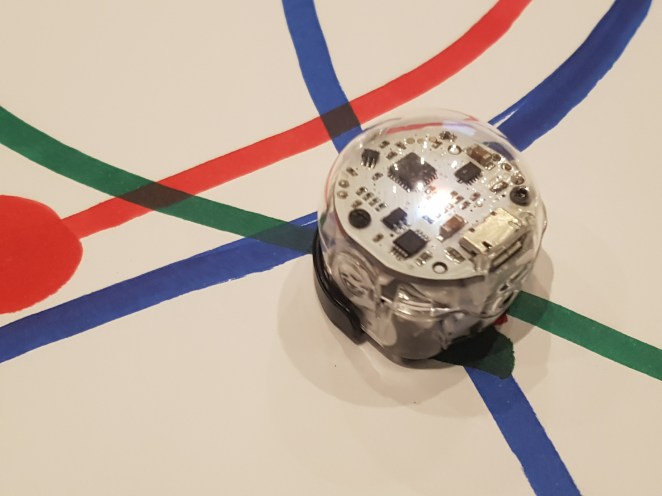
20160915_093502

During our Nordic conference this year, we explored using Ozobots to teach students more about coding. Ozobots can follow simple lines and dots drawn on paper and execute commands the students decide they should do, based on easy colour codes. Coding is so simple and easy to understand this way!

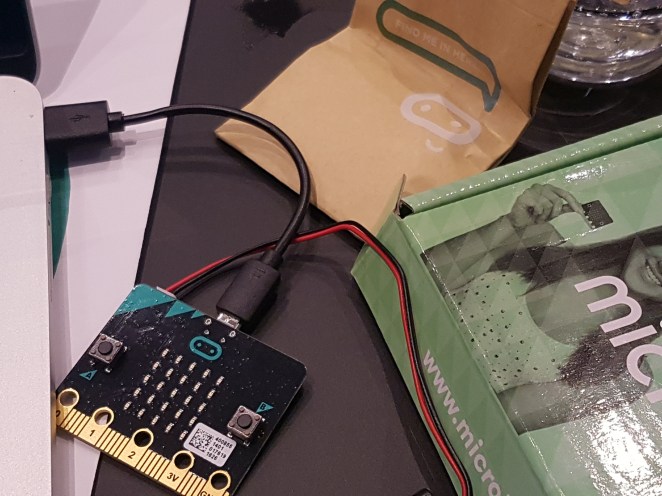
20160914_215829

We also tested micro:bits which allows students to use code blocks to create commands which will be shown in the micro:bits display of lights attached to the computer. This activity is a great follow up if your students have participated in the Hour of Code and want to learn more!

20160914_220738

The Ozobots and micro:bits are made for educational purposes, so they are not expensive! Letting students explore Ozobots and micro:bits engages students in both critical and creative thinking; when they are solving problems using code. If you create an eTwinning project with a fellow teacher using eTwinning, you practice communication and collaborative skills too!

At the conference we were so lucky to have David Heathfield work with us. He had a storytelling session and a workshop where we learnt more about storytelling. Stories are great to connect people across borders and to build bridges. Many eTwinning projects explore similarities and differences in our heritage; a surefire way to engage both teachers and students! eTwinning and storytelling go hand in hand!

20160915_203215

eTwinning projects come in all shapes and last for a few weeks and  up to a year. Since the start over 50.000 projects have been carried out, and soon teacher number 400.000 will register in eTwinning. Maybe you will be that eTwinning teacher?

20160916_093651

I would like to give a big shoutout to the Danish NSS and the Danish ambassadors, for facilitating a great conference! You can follow us on twitter: @eTwinningdk @eTwinningEurope @eTwinningNorge and look up #eTwinning


Reflections on going paperless in class

20160530_101655

Teaching without textbooks or notebooks

This term my students and I continued our digital journey together. We had our notebooks in Google Docs, and most of the content and learning resources were found online. At the end of the term, they have all their notes from class and homework, inserted with images from the blackboard, the projector screen and pictures of their brainstorming maps. All kept for as long as they want them, without demanding physical space. This will be very useful next school year!

However, some of my students expressed that they missed the textbook. They felt they lost control, and didn’t get the big picture without it. This became apparent before tests. The tests were designed to capture concepts and ideas we had discussed in class, not pages or tasks from a textbook, but I understood their concern. We brought the textbook back for our last topic, and the relief was apparent among these students, and quite a few parents too, who felt it was hard to help their students without a textbook! This is something to keep in mind when going paperless. We have both the students and their parents who need to find and understand the content we teach.

Most students kept the same Google document for all notes and images in one subject. This document became quite long by the end of the year! We found that using the outline function in Google Docs helped us navigate long documents. Whenever a student make a headline, it will pop up as an entry in the outline in the left margin of the document. Very handy! Nevertheless, not all my students chose to keep only one document for the notes in a subject. Some made a new document every time they had a lesson, or did a homework. If they used titles wisely, this was not a big problem. On the other hand, those who forgot to use titles, had endless documents to search through to find the right one, when prompted to share their homework in pairs or small groups in class. I learned from this that I will have to include digital structure, using folders, titles and outlines in documents in the beginning of each class I teach next school year.

Sketchnoting

Going paperless hasn’t meant we have not used paper at all. We have! This year I introduced my students to Sketchnoting. My inspiration is Sylvia Duckworth. (You can follow @sylviaduckworth on twitter, and maybe you will be inspired by her work too.) We made sketchnotes mostly when summing up the work we had done on a topic, and used a presentation to prompt ideas. The students loved making sketchnotes, and I was glad to set aside time to ensure everyone could make a good one.The actual paper with the sketchnote might soon be lost, but when the image is inserted in the Google Docs, the students keep their work, forever? You can see an example here. It is in Norwegian, but I think it illustrates the concept well:20160523_130753

International collaboration and co-creating content

Some of the materials we used this year, we created along with fellow students in other countries. My students in the elective subject “International Cooperation” wrote letters with their Italian and Lithuanian partners in our eTwinning project “Hostel Europe”. We used the eTwinning platform to establish teams, and they co-wrote letters in Google Docs. We wrote suggestions to our local administrations with suggestions to help integrate people who have had to migrate from their own country because of war. We printed the papers, signed them, and sent them to the Mayor in our towns. You can see our letters below. We also received a letter back from our Mayor, thanking the students for their concern and good ideas about integration!

20160428_144330

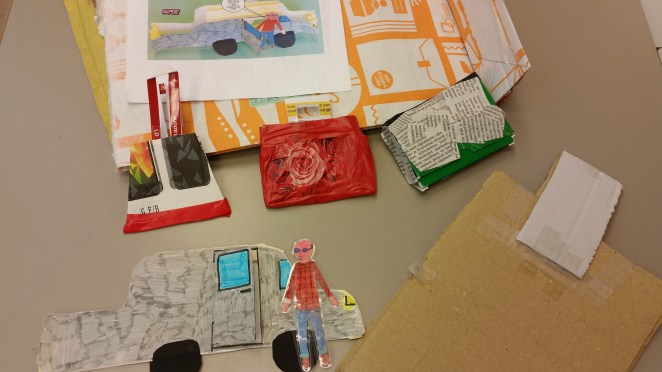
In one of my classes, we also created an ebook using Calameo, with all the stories we made in our eTwinning project “The Old Man and His Fiat600”. This was a lovely project where my students collaborated with partners in Italy, France, Finland and Portugal in creating stories about a fictional figure “The Old Man” who we made a paper copy of, and sent from country to country. While he visited each country, we wrote stories, and made presentations about his visit, and shared in the eTwinning portal with all our partner students. We also used Padlet to let the students collaborate in international groups to create padlets about their free time, favourite dishes and summer greetings. Padlet is super easy to use, and a gift to all educators. It is free to use, and has endless possibilities! Go try it, if you haven’t checked it out yourself yet. Here is a picture of “The Old Man” when he visited us at Ramstad skole this term:
20160208_122726

Each class added a small bag with small pictures of typical items from their countries. My students went on excursions outside of school in order to take better and more interesting photoes of him, from our neighboring city Oslo, and some took him along to their cabin in the mountains, to show our project partners more of our country’s nature. It was touching! Everyone was a bit sad too, when we sent him along to Portugal!

Next term, let’s make the textbook ourselves!

Going paperless has been a process for me. It started gradually, with using eTwinning and Google Docs, Evernote, Skype, and making videos in class. This year I went all in, and left the textbooks and notebooks behind. My students never questioned why we did this. It seemed natural to embrace technology which they use all the time anyway. After a while, some students missed the safety of the textbook, and some parents thought it was easier to help their teenagers when they had a textbook too. So, I keep this in mind going forward. Most students benefit from having book or a booklet when working with a topic. What I am thinking now, is that we are going to make that booklet ourselves next term!

I’d love to hear your ideas, and learn about your experiences when going paperless too. Inquiring minds want to know!


End of term reflections 2015

godjul2015

This last term I went paperless in class. My students opened notebooks in Google Docs, and we hardly used any textbooks at all in any of my subjects (English (ESL), social studies, religion and an elective called international cooperation). This was a new approach for my 8th graders, but they didn’t bat an eye before diving into it.

All my students bring their smartphones to class. We have a BYOD policy (link to Edutopia), and I have embraced this a few years already. Now it was essential! Without notebooks, they had to use their phones to access their Google Docs, and of it meant starting our journey together on digital citizenship (Edutopia).

Needless to say, some time was lost due to lack of battery, wifi troubles and password confusion when working with new tools and apps, but I believe we encountered these obstacles earlier, and have learnt from them, rather than thinking we could have avoided them altogether.

The tools and apps we have used the most are Google Docs and Google Slides. This has allowed my students to work collaboratively in groups and as a class without regard to time and place.

Creating a global classroom is something which has been important to me for a long time. All my classes are involved in eTwinning projects, with project partner schools in Italy, Portugal, France, Lithuania and last but not least; Lillesand, my hometown in the Southern part of Norway. Activities differ according to the topics of the projects, but they are communicating and they have a real audience for sharing their work. They will experience collaboration across time zones and borders next term, and increase their cultural understanding, which are some of the primary goals when using eTwinning.

This term my students also used Soundcloud and shared stories in Padlet. Sadly not everyone managed to access Soundcloud from their device, but the lesson was a powerful one: recording and sharing their best work. Audacity might be a smoother working alternative, so I will continue exploring tools for this kind of work next term.

Kaizena proved to be almost exactly the sort of tool I was looking for when grading English texts. My students add their Google Docs in Kaizena, and I can edit their documents in Google, and give feedback on their skills, and post lessons which are relevant to each student according to their needs to improve. One drawback is that Kaizena is not compatible with Microsoft Explorer, so when using the school computers we came up blank trying to connect to Kaizena. This meant that we had to rely on the smartphones, or our computers at home to use it. The upside is that the students can keep track of their skills and play posted videos or read articles about skills they need whenever they want to.

We started out enlisting in Curriculet for reading novels online. It was easy to set up the whole class, but the available books turned out to be a bit hard for my 8th graders, and the free classics only appealed to a few of them. I have to explore other apps and reading experiences for them this term, and maybe come back to Curriculet next term, when we have classics lined up as a topic in our English classes.

Formative assessment (Edutopia) is something I have used always, to some extent, but I haven’t been conscious of the term or how to best use it to improve my student’s learning. This term I used Socrative and Answergarden more and shared it with parents. These tools have lit up my understanding, and I recommend them to everyone!

A new tool I have tried in my English classes this term is noredink. It assesses each students’ grammar ability, and gives them new tasks according to their skill level. A gift for any teacher! It is calibrated for native speakers, so choosing the grade level with care is important. I look forward to exploring this tool further in the upcoming term.

My school, #Ramstadskole, will start giving each student an ipad 1:1 this next term. Before this happens our broadband facilities will be improved, and the teachers and students will get some training. I hope that the experiences we have gained so far; going paperless and using edtech tools will make the transition to ipads easier.

Which experiences, ideas and tools were the most important in your teaching this last term? Inquiring minds want to know!



New School Year – New Plans

Ramstad, August

It’s that time of the year again; time to start a new school year. We have a few days of planning before I meet my new students on Monday the 17th of August. This year I am teaching Grade 8. My students are 12-13 year olds, and I am excited to get to know them!

The last few years I have had a goal to open my classroom to connect with pupils and teachers in other countries using eTwinning and Skype Classroom. I plan to continue with these projects, and I also hope to connect with a friend’s class in the Southern part of Norway. I am certain we can learn a lot from each other, both similarities and differences within our country.

I also hope to go more paperless this year. I will explore using Google tools even more, and maybe it is time to let the books go too? I have a feeling I will need to use them to some extent, but this is something I want to try out. I would like to use real world events and more authentic problems and cases in my classes. One of the first topics in English and social science is The American Revolutionary War, and I plan to use the Storyline methodology, a method students often get really excited about!

In this spirit I will try out Kaizena when receiving texts and giving students feedback in my English (ESL) classes. It looks great, and I hope my students will like it too. I also want to put more emphasis on reading in class, and I hope to be able to use Curriculet for this. I had planned to use it with my Grade 10 classes last year, but time ran out when the last exams loomed in the horizon. This year, I’ll definitely give it a go!

Have you set any specific goals for the next school year? Have you used Kaizena or Curriculet before? I’d love to hear about it! I wish everyone a great new school year!

2014 in review

The WordPress.com stats helper monkeys prepared a 2014 annual report for this blog.

Here’s an excerpt:

A San Francisco cable car holds 60 people. This blog was viewed about 550 times in 2014. If it were a cable car, it would take about 9 trips to carry that many people.

Click here to see the complete report.

Why I blog

These days I only seem to use WordPress when longer blogging is a task in my studies at NTNU. First in the MOOC Technology and Change in Society (2013), and now in the MOOC Smart learning (2014).  I have used WordPress for a while with my students when they were in Grade 9, and I found it to be a great tool to try, but it hasn’t become one of my most used tools, yet. I like twitter the best these days. It is short and to the point, and thus I use it more. This might change if I find inspiration among my fellow colleagues, in how to improve my use of WordPress in the future. I look forward to see how others use it with their students. I’d like to know why you blog as well! 🙂

20140918_134328

Konsekvenser av netthandel eller “Amazon is Amazing!”

Jeg handler nesten alle bøkene jeg leser på amazon.com! Det er flere grunner til dette: Utvalg, pris, leveringstid og  anbefalinger. Jeg leser nesten kun engelske bøker og på amazon er utvalget fantastisk godt. Jeg synes dessuten prisen er utrolig mye bedre enn i norske bokhandlere. Videre får jeg levert bøkene jeg bestiller på sekunder til mitt lesebrett, og jeg får i tillegg anbefalt bøker ut fra hva jeg har kjøpt og sett på før. Det er vanskelig for meg å finne noen annen tilbyder som kan konkurrere med amazon.com.

Ettersom flere og flere handler ulike varer på nett vil det i verste fall kunne føre til butikkdød i Norge.

Når jeg handler på nett taper de lokale bokhandlene på det. Bøker er blitt ferskvare på den måten at bøker vi har lest gir vi ofte bort gratis til loppemarkeder, og de som ikke selges der kastes. Som produkt har varen bok gjennomgått veldig stor forandring på relativt kort tid i forbindelse med salg over internett. En regelrett revolusjon. For min del har konsekvenser av å lese på nettbrett og bruk av amazon ført til at jeg leser mer enn før. Jeg har alltid lest mye, men nå leser jeg enda mer! Konsekvenser for bokhandlere av at flere kjøper bøkene sine på nett, kan være redusert salg, og at de mister nødvendige inntekter for å gå i balanse, og dermed må legge ned bokhandelen sin, eller legge om konseptet sitt og ta inn andre varer enn før for å fortsatt tiltrekke seg kunder og få salg.

Jeg kommer til å fortsette å kjøpe bøker på amazon.com uavhengig av hvordan det går med norske bokhandlere. Økt konkurranse kan føre til at noen må legge ned og andre legger om produktutvalget sitt. Det ser jeg ikke som noen ulempe, men som realiteter ved å drive handel.

Konsekvensene ved økt netthandel er likevel til betenkning for meg, siden jeg vet at dette kan komme til å gjelde mange typer varer og dermed mange typer butikker i Norge i tiden fremover. Tanken på flere tomme butikkvinduer i byene våre er ikke lystbetont. Her er det en utfordring til alle kommuner om å skape gode møteplasser i årene som kommer, og kanskje vil bibliotekene og lokale bokutlånstjenester komme til å vokse i bruk? Se eksempel via Pinterest her: http://www.pinterest.com/pin/270990102551776588/

Bør grensen for avgiftsfri handel på nett fra utlandet økes?

I dag er grensen for avgiftsfri handel for fysiske varer på 200 kroner. Ordningen med en beløpsgrense ble bestemt i 1975. Da var beløpet på 20 kroner. Dette var lenge før det var aktuelt å handle over internett. I 1999 ble beløpet endret til 200 kroner. Her kan du lese om hva beløpsgrensen betyr for deg, hvorfor denne saken er interessant akkurat nå, hvilke regler som gjelder i andre land, og svar på om grensen bør økes.

Hva betyr beløpsgrensen for deg som kunde? Det vil si at du kan handle fysiske varer over nettet for inntil 200 kroner uten å betale 25% merverdiavgift (også kalt moms), og dessuten toll hvis du handler klær. Dersom du derimot handler for mer enn 200 kroner, må du betale moms og eventuelt toll i tillegg. Momsen gjelder faktisk både for varen og frakten. Unntaket her er bøker. De er fritatt fra moms. Et regneeksempel ung.no har gjort viser prisen på en bukse øker fra nettbutikkens pris på 850 kroner til din faktiske regning på 1245,40 – når moms og toll er lagt til, og i tillegg kan nettbutikken legge til ekspedisjonsavgifter, og Posten legger til et fortollingsgebyr på minimum 117 kroner på toppen av dette. Hvis det derimot er digitale tjenester du kjøper, som for eksempel programvare, som leveres over internett, så er det toll fra første krone, og altså intet avgiftsfritt beløp. Før var det bare bedrifter som betalte avgift på slike tjenester, men fra 1. juli 2011 må privatpersoner også betale.

Hvorfor er denne saken interessant nå? Ved regjeringsskiftet i høst har Høyre og Fremsrittspartiet uttalt at de vil øke beløpsgrensen, men det er ennå ikke klart hva det nye beløpet blir. Både Fremskrittspartiet og Venstre har uttalt at de vil heve grensen til 1000 kroner. Hvis beløpet stiger til 1000 kroner, frykter flere at arbeidsplasser i Norge kan gå tapt, dersom det ikke blir tilsvarende momsfritak på varer kjøpt innenlands. Hvis beløpsgrensen heves vil konkurransen fra nettbutikker i utlandet være reell for alle som selger varer i butikker i Norge. Harald J. Andersen, direktør i Virke, frykter det vil kunne bli “butikkdød” over hele landet, særlig der hvor tilbudet er minst fra før.

Hvilke regler er vanlige på dette området i andre land? I Danmark er beløpsgrensen 80 danske kroner. I Storbritannia er grensen 137 kroner og i Sverige er det ingen beløpsgrense, de må betale moms fra første krone på alle fysiske varer kjøpt utenfor EU. Innad i EU beregnes og betales moms fra landet den fysiske varen sendes fra. Ut fra dette ser vi at Norge har en ganske høy beløpsgrense for fysiske varer kjøpt på nett fra utlandet.

Tom Erik Sørensen og Trine Søraa skriver i boken sin “Historiske Trondheim – En vandretur i historiske Trondheim” om at bydelen Bakklandet ikke ble en del av Trondheim før i 1845. Før den tid kunne man dra over Nidelva for å drive avgiftsfri handel. Det er interessant siden de beskriver en tid som vi ofte tenker er fjern for oss, men noen av utfordringene de hadde i 1845 er de samme som i dag. Butikker innen en geografisk sone frykter konkurranse fra butikker i en annen geografisk sone med andre konkurransevilkår som gjør prisene billigere, og medfører handelslekkasje, tap av inntekter og i verste fall konkurs for enkelte. Lover og regler kommer ikke sjelden på banen i etterkant av at praksis innen et område er etablert, eller vesentlig endret. Internett endrer handel land imellom vesentlig. Reglene kommer på plass etterhvert. Det er fordeler for kunder å hente på å kjøpe varer fra utlandet, men avgiftene som påløper kan endre prisen fra den du ser i nettbutikken til den endelige prisen på varekjøpet etter moms, toll og fortollingsgebyr er lagt til. Regjeringsskiftet foreslår å endre beløpsgrensen, men det er ennå usikkert hva en ny grense blir. Andre land vi liker å sammenlikne oss med har lavere beløpsgrense enn oss. For min del er det siste avgjørende for hva jeg tenker nå. Så lenge andre land vi samarbeider med har en lavere grense, ser jeg ingen grunn til å heve beløpsgrensen i Norge ytterligere akkurat nå.

Kilder:
Distansehandel.no: http://www.distansehandel.no/?n=62

Butikksiden.no: http://www.butikksiden.no/archives/valg-2013-200-kronersgrensen

Tollvesenet: http://www.toll.no/templates_TAD/MainTopic.aspx?id=244979&epslanguage=no

PC World: http://www.idg.no/pcworld/article272370.ece

Ung.no:http://www.ung.no/forbruker/1635_Slik_beregner_du_toll_og_mva.html

Nettavisen: http://www.na24.no/ipad/?articleId=3692297

Nettavisen: http://www.na24.no/m/?articleId=3693847

DinSide: http://www.dinside.no/832392/tenk-paa-dette-for-du-handler-fra-utlandet

Liberal.no: http://liberal.no/2011/11/heving-av-grensen-for-avgiftsfri-import-fra-kr-200-til-kr-500/

Akademikaforlag: http://www.akademikaforlag.no/content/historiske-trondheim#book-right