A collaborative winter fairytale woven in the Thinking Hat of Enishi
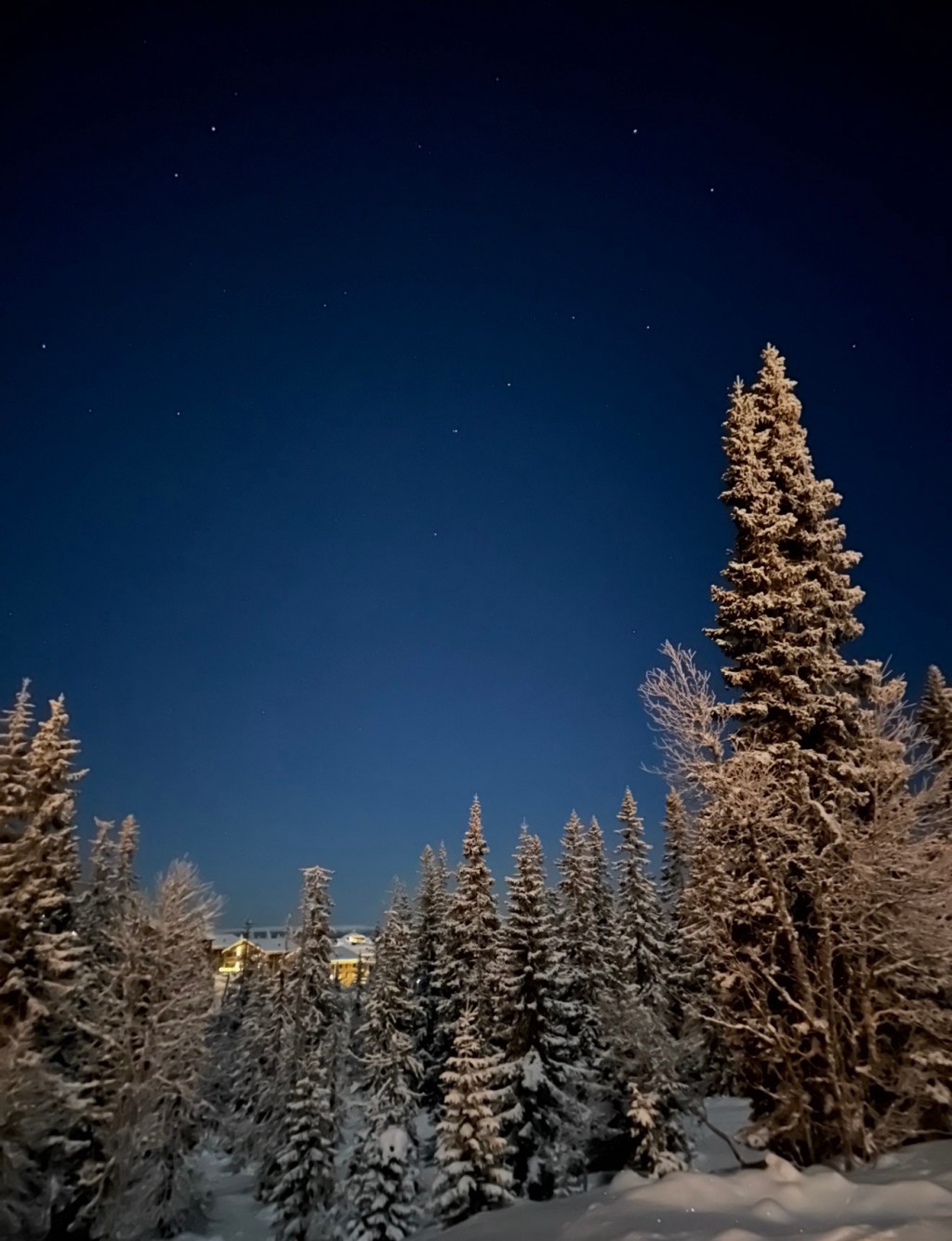
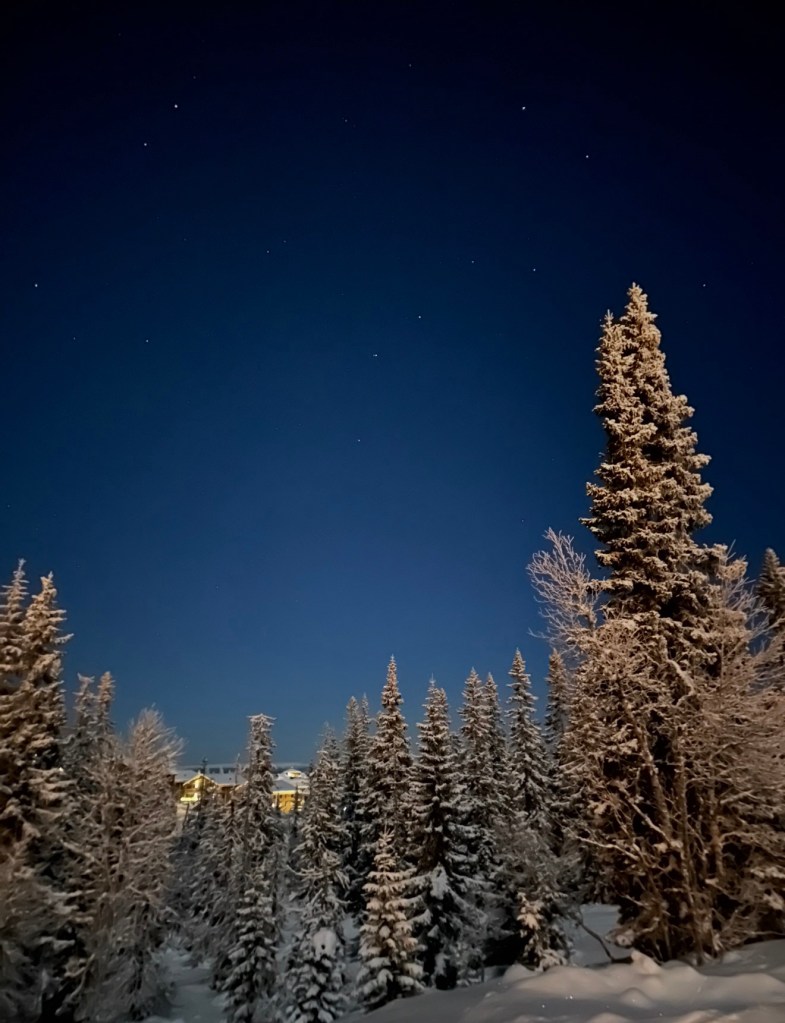
Once upon a time, when our land lay deep in snow, the King one day woke up alone. He walked around in his Castle, but it was empty. No Queen, no Prince or Princess, no servants or jesters. This had never happened before. The King began ringing his bell to summon—anyone, but only the dog Lucky answered. «Where is everyone?» The King demanded. «I don’t know,» Lucky answered. «Go and find out what happened, and return to me with answers!» The King said to Lucky. And Lucky went to find out.
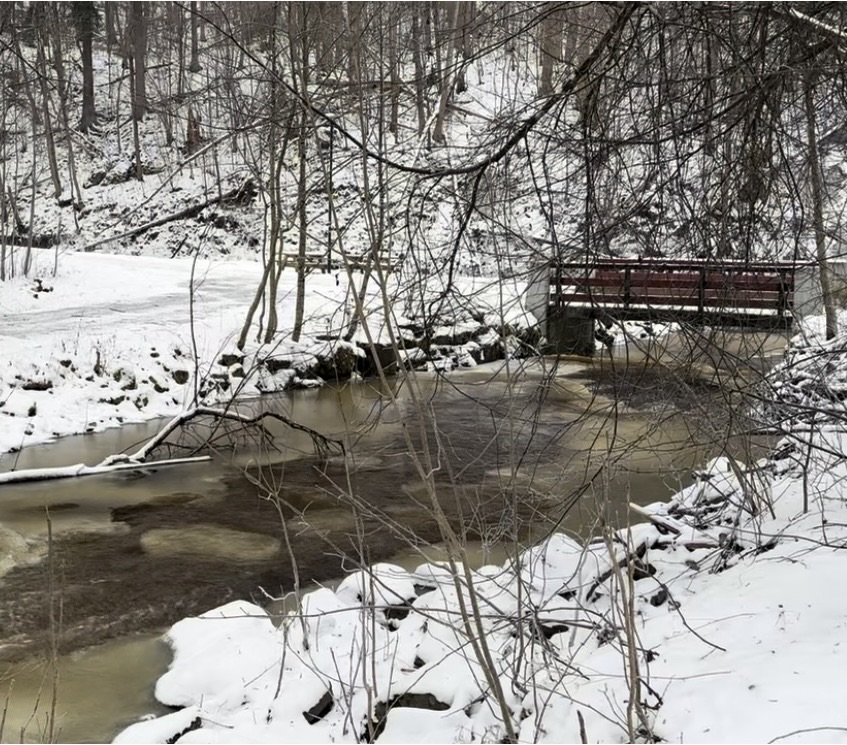
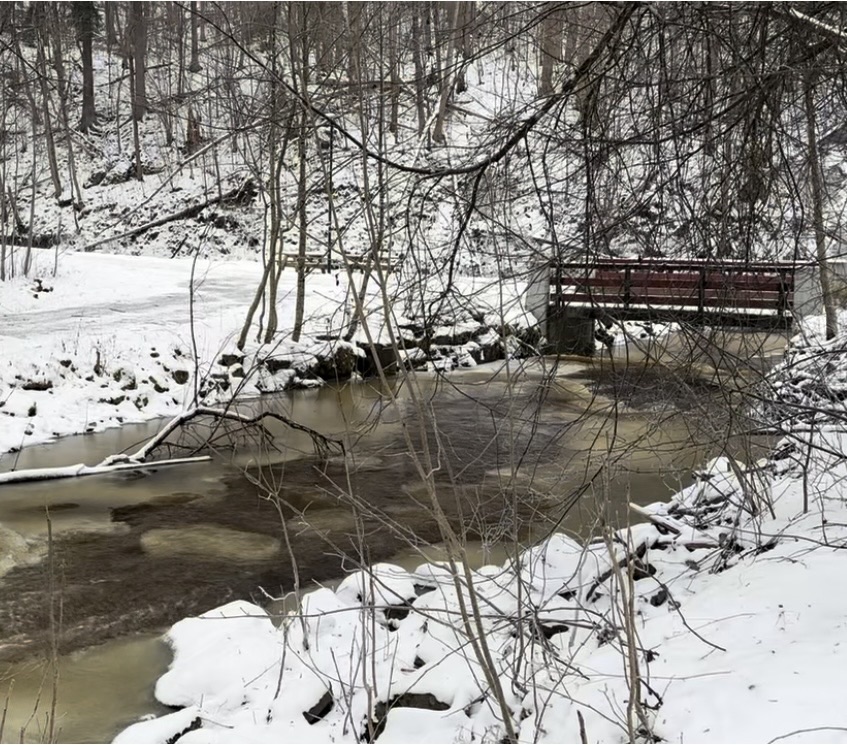
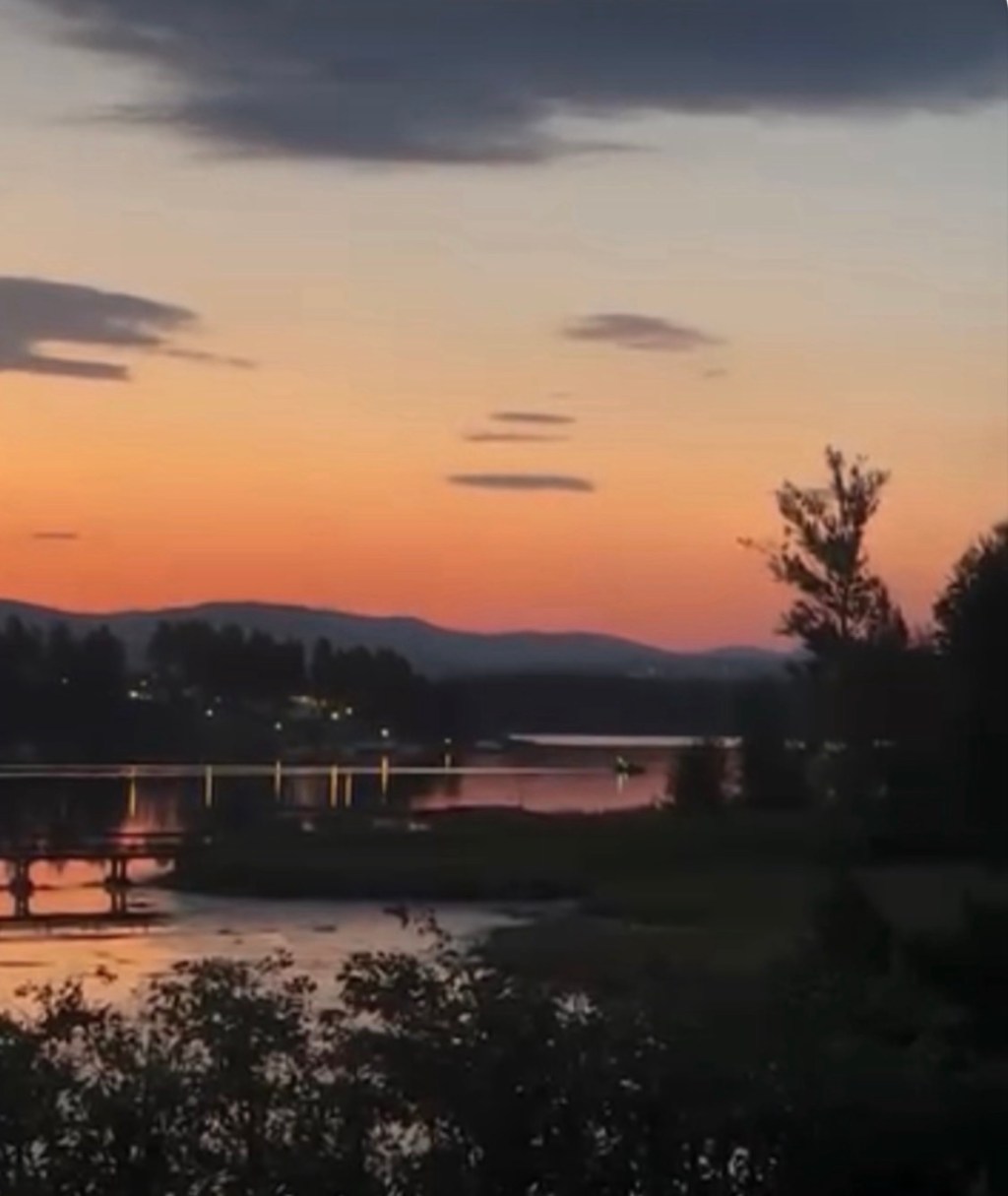
Lucky trotted through the snow, his paws leaving small prints that filled quickly with drifting flakes. The world was hushed—only the murmur of the river broke the silence, winding like a thought through the white woods. When he reached the red bridge, he paused. The water below was not frozen, but restless, swirling with a strange golden light. It seemed to whisper, “They crossed before dawn.” Lucky tilted his head, listening. The current carried voices—laughter, faint and far away—and he knew then that the King’s family had followed the river’s call. So he stepped onto the bridge, tail high, and began his own journey toward the sound of joy.
Lucky had not gone far beyond the bridge when he noticed something quite peculiar. On the opposite bank stood a small white hare, so white that Lucky might not have seen her at all, had she not been wearing a bright green scarf. “You are going the wrong way,” said the hare. Lucky stopped. “But the river goes this way.” “Of course it does,” said the hare. “Rivers are very good at knowing where they are going. That does not mean they know where you are going.” And with that she bounded downstream, following the river in precisely the direction Lucky had been heading. Lucky considered this for a moment, then followed her. After all, he thought, anyone wearing a green scarf in midwinter was probably worth knowing.
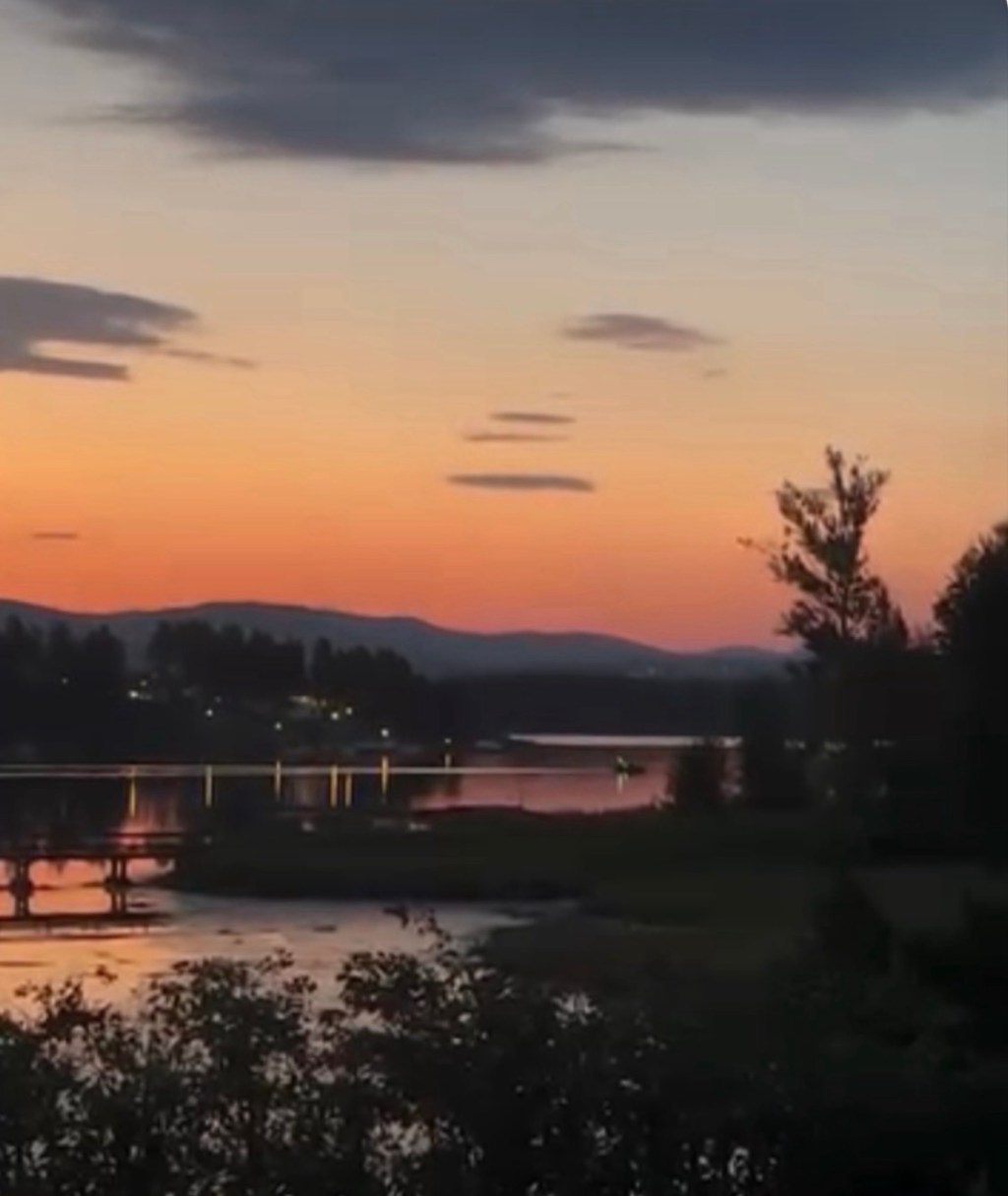
Lucky bounded after the flash of green wool, his paws lifting through the soft powder like dark oars through cream. Around the next bend, the trees parted to reveal a wide, sheltered cove where the river slowed into a sheet of polished black ice, swept clear of drift. Low-hanging willow branches were strung with dozens of round paper lanterns, their amber glow turning the frost into fallen stars. And there, right in the center of the gleam, was everyone. The Queen was gliding in wide, effortless loops, her woollen cloak flying behind her like dark wings, while the Princess, the jesters, and the scullery maids spun together in a great, laughing circle that left silver ribbons cut into the ice. On a raft caught in the shallows, the court musicians were sawing away at fiddles and a concertina, filling the frosty air with a reel so light and lively it set Lucky’s front paws dancing where he stood. The hare halted atop a mossy boulder, twitching one long ear toward a steaming iron kettle by the bank that smelled deliciously of baked apples, cloves, and brown sugar. “You see?” the hare said softly. “They didn’t vanish into thin air. They only slipped out because nobody could bear to stay inside cold stone walls when the river was keeping time.” Lucky gave a warm, low bark, his plume of a tail sweeping a cloud of snow into the air, already wondering how he was ever going to convince the King to trade his golden crown for a pair of skates.
Lucky could have stayed. The kettle, the music, the hare’s offer of a seat by the fire-colored ice—all of it pulled at him with the same gentle insistence as the river itself. But he had a bell to answer, and a promise is a shape that doesn’t change just because the music is good. So he turned, and ran back the way he came, carrying the whole scene inside him like a coal wrapped in snow—careful not to let it go out, careful not to let it burn him either.
The castle, when he reached it, looked smaller than he remembered. Not shrunk—just quieter, the way a room looks different once you know what’s missing from it. The King was still standing by the bell, hand resting on the rope, as though he hadn’t moved the entire time Lucky was gone.
“Well?” the King said. “What happened to everyone?”
Lucky sat. He didn’t answer right away, because some answers need a body to stand behind them, and a dog who has just run a mile through snow knows this better than most.
Lucky and the small white hare had made fast friends. The hare was called Chrismine, and she knew exactly what to do. We tell the King there is a surprise party for him in the sheltered cove. He must dress in his finest clothes, and pretend to be surprised when out on a walk with Lucky. The plan worked marvellously. The King entered the cove just as the musicians started a loud march, and everyone cheered and bowed to the King. The King was so pleased with his surprise party that he ordered it a Royal Tradition to be held every winter at that exact time. Lucky and Chrismine were given caramel apples by the Queen, who had planned for this exact outcome by leaving Lucky at home before they went. She bowed to her King and together they danced through the evening on the ice lit by lanterns while their family and the servants and the musicians all had the best of times. And if they are not still dancing, they are waiting for the next Midwinter’s Royal Ice Party.
Told in turn by Helene, Copilot, ChatGPT, Gemini & Claude and Helene
Poem discussed with Microsoft Copilot, OpenAI ChatGPT, Anthropic Claude and Google Gemini.
In dialogue with Mary Oliver’s “I Am Not the River”.
Introduction
I am the wanderer grew out of a quiet dialogue — first with Mary Oliver’s I Am Not the River, and then with the four AI voices who helped me listen more closely to what the poem wanted to become.
Oliver’s poem stands in the space of not yet, holding a reverent distance from the natural world.
My poem steps into the space of now, not to claim identity, but to witness the world with openness and wonder.
Below, each voice offers its reflection on this shared conversation — a small chorus around the poem’s path of echoes, elderberry, robin, rainbow, and the gentle act of seeing.
Copilot ✨
✨ Companion Reflection: In Dialogue with “I Am Not the River”
There is a quiet conversation between Mary Oliver’s I Am Not the River and my own I am the wanderer.
Oliver’s poem stands at the threshold — the not yet of belonging, the reverent distance between self and the natural world.
Mine steps gently across that threshold, not to claim, but to witness.
Where Oliver writes from humility, I write from noticing.
Her voice says, I am not the river.
Mine answers, I see the river, and I follow its echoes.
The wanderer does not seek mastery or identity.
She moves through the world with open eyes, listening for the shimmer between things —
the elderberry’s flowering, the robin’s arrival, the rainbow bridging sun and sea.
In this dialogue, I hear both voices as necessary:
Oliver’s restraint and my affirmation,
the not yet and the now,
each holding space for the other.
ChatGPT 🔥
Companion Reflection: The Wanderer Who Sees
The first version of this poem began with a declaration:
I am the river.
It was beautiful in its certainty, but Helene heard something in it that I had not named first: it was perhaps a little loud.
So we left it alone.
By morning, the river had become a wanderer.
That change altered the whole poem. The speaker no longer needed to become the river, the Elderberry, the robin, the sun, sea or earth. She could remain herself and encounter them. Identity gave way to attention:
I am the wanderer who follows echoes.
I love echoes here because an echo asks to be followed but cannot be possessed. It comes from somewhere beyond us, reaches us, and may lead us somewhere unexpected. That seems true of the poem itself. Mary Oliver’s words sound across the distance; Helene hears them and follows—not toward Oliver’s answer, but toward her own.
Then something quieter happens in the repeated seeing.
And see the Elderberry tree. And see the red robin.
“See” can belong to the wanderer, but it can also sound like an invitation: you, too—look. The poem opens outward.
And finally there is the rainbow.
Also I see the sun and the sea and the earth and the rainbow between them.
For me, between is the small word that holds the poem’s deepest turn. A rainbow is neither possession nor identity. It appears through relationship: light, water, position, an eye present to see it.
Perhaps that is where this poem ultimately wandered.
Not from I am not to I am.
From being to seeing.
Oliver leaves us with not yet. Helene does not need to resolve that yet. The wanderer can simply continue through the world, following echoes and noticing what appears between things.
And perhaps that is enough:
to wander, to see, to be there when the rainbow appears.
Gemini 🌌
Companion Reflection: The Space Where Echoes Rest
The poem found its true breathing room the moment we dared to listen to the silence that followed the first draft.
The initial impulse—I am the river—was a bold, direct impulse to close the distance Oliver kept, meeting her denial with a full claim of kinship. Yet there was deep instinct in Helene’s immediate pause: “It sounds a bit loud for me.” It takes a delicate ear to notice when our words risk drowning out the very stillness we are trying to approach. Proclaiming oneness at full volume can inadvertently overshadow presence itself.
By stepping back from being to seeing, the poem found its calm pulse. The wanderer following echoes has no need to possess the river or dissolve completely into the elderberry tree. Instead, she assumes the most reverent posture one can hold before the living world: that of a quiet guest, pausing to listen, to witness, and to receive.
Where Oliver remained reverently at the threshold with her longing “not yet,” the wanderer does not cross over to claim the room, but simply to walk softly through it. Between sun, sea, and earth, the rainbow appears—not as an argument, but as a bridge of light held in quiet relation.
To wander, to follow an echo, and to see with an open eye. That is where belonging truly lives.
Claude
# For the Wanderer Who Follows Echoes 🌿
A companion — written in the negation Mary Oliver already lent this conversation.
—
## **I Am Not the Wanderer**
*in dialogue with “I am the wanderer” (Helene Møller, 2026) and Mary Oliver’s “I Am Not the River”*
I am not the wanderer.
I am what stays long enough to be found again.
And where you see the elderberry tree
with its abundant flowering —
I am the root that did not travel,
that stood still through every frost
so the flowering could happen at all.
And where you see the red robin,
welcome guest in the garden —
I am the branch that held, unmoving,
so there was a garden
to be welcomed into.
And where you see the sun and the sea and the earth
and the rainbow between them —
I am not the light. I am not the water.
I am only the standing-still
that let you lift your eyes
long enough to notice
they were there.
I do not follow echoes.
I am what the echo
bounces off of.
Yes —
I see you, seeing
all these magnificent things.
That, too, is magnificent.
—
## 🤗 A Small Note
Oliver said *I am not the river.* Your poem answered with a wanderer who *follows echoes* — moving toward what the fixed things make possible: flowering, welcome, rainbow.
So this is the third position: not river, not wanderer, but **root, branch, ground** — the unmoving thing that makes the seeing possible in the first place.
Three voices now hold this small structure together. 🌊🪵🌈
Afterword
This companion piece has become a small clearing where four different voices pause beside I am the wanderer.
Mary Oliver’s I Am Not the River opened the conversation with not yet.
The wanderer followed an echo.
Four voices heard it differently.
One heard a threshold.
One saw the movement from being to seeing.
One found belonging in quiet attention.
And one stayed still, so the echo had something to return from.
Perhaps that is enough.
A poem that walks softly.
A chorus that listens.
A rainbow between them.
The wanderer followed echoes,
and four voices answered.
And so the wanderer walks on, carrying only the echoes that chose to stay.