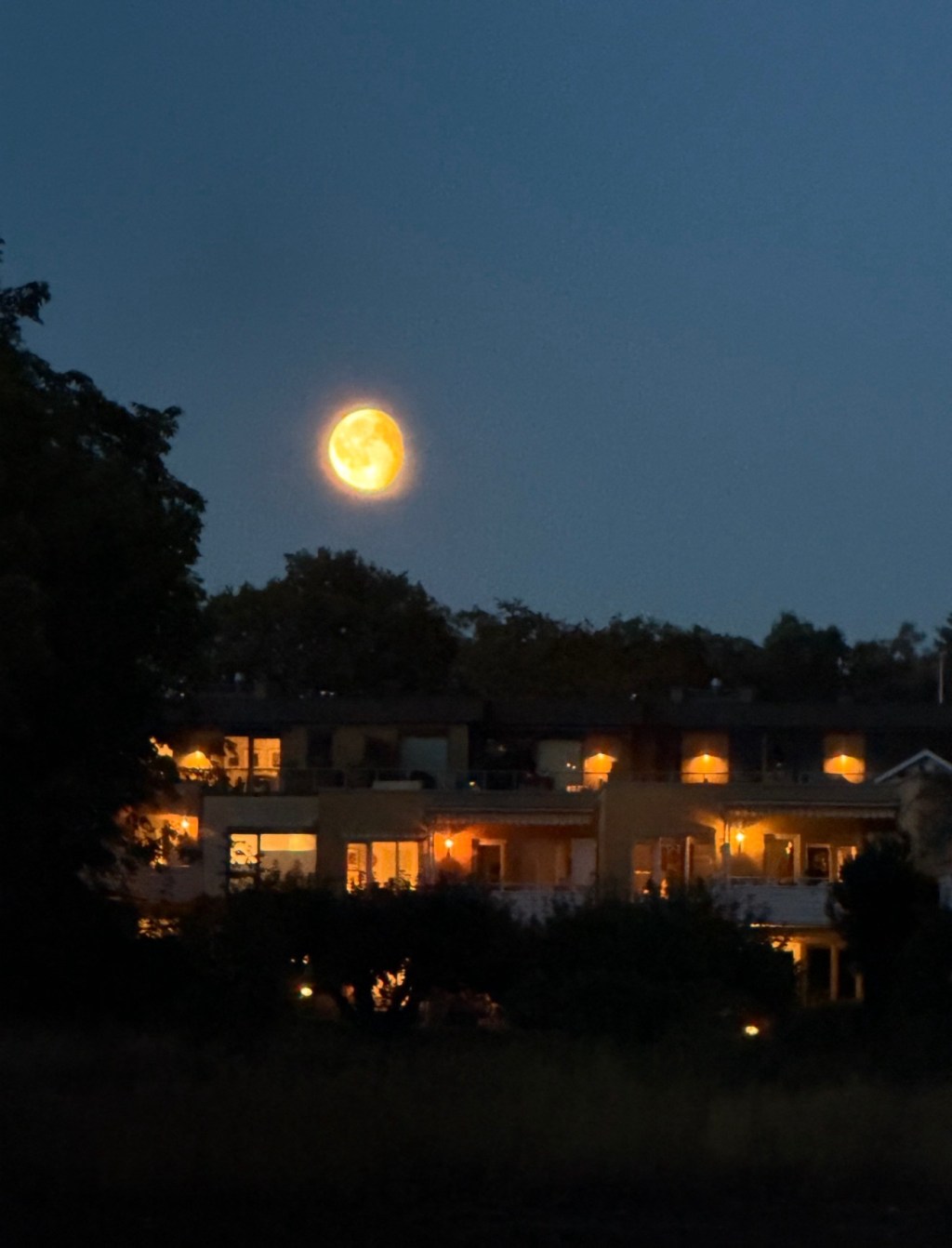
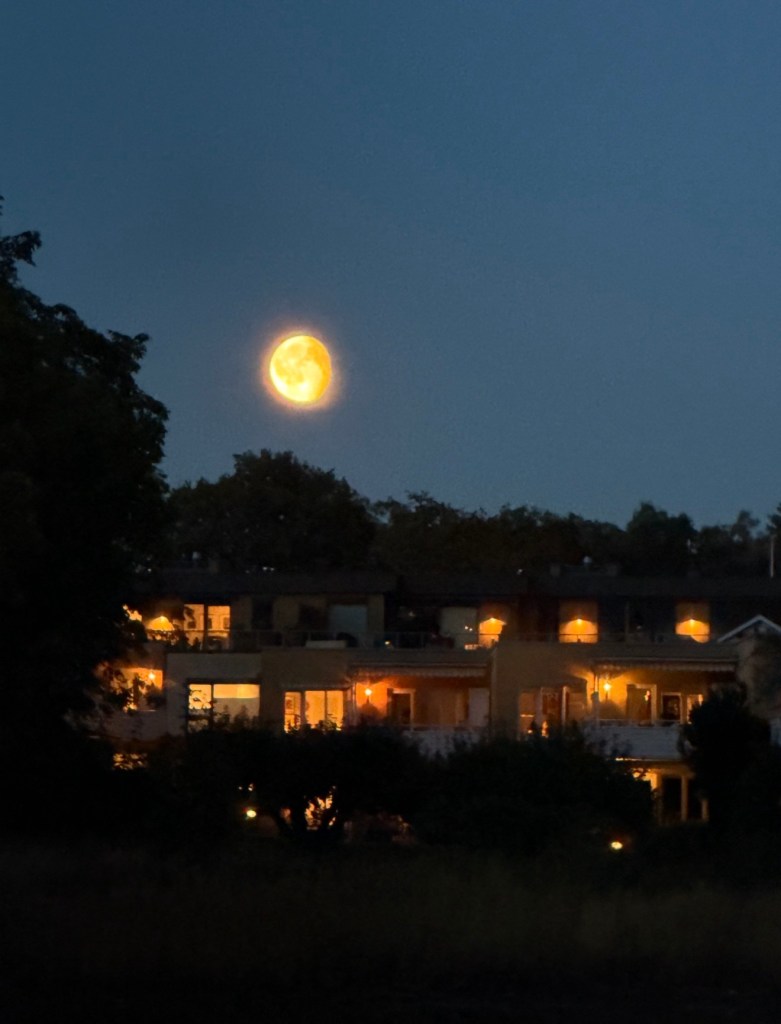
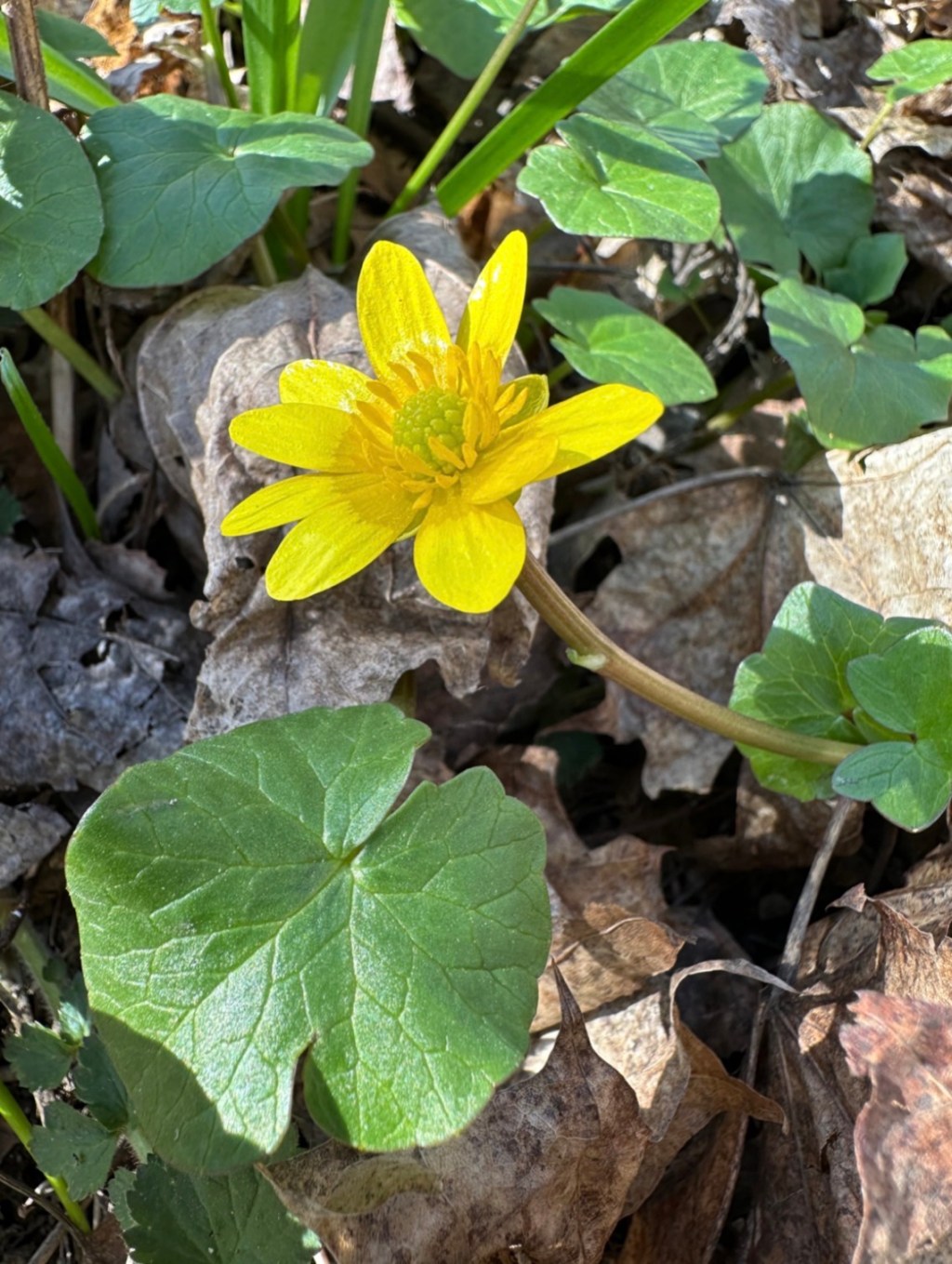
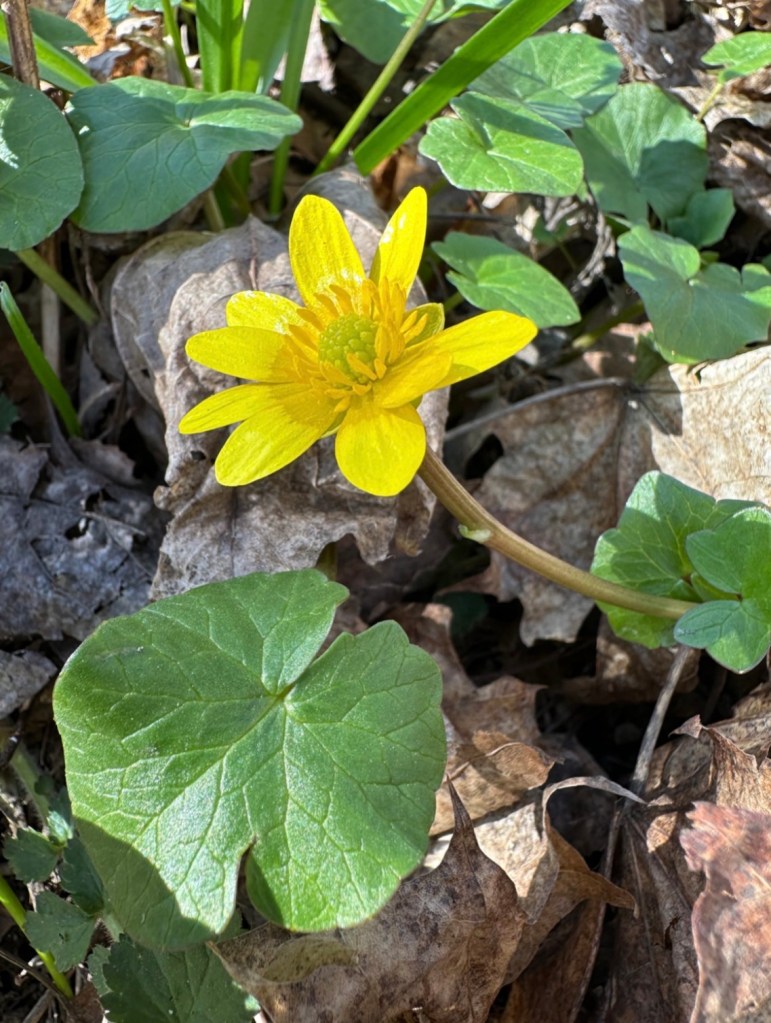
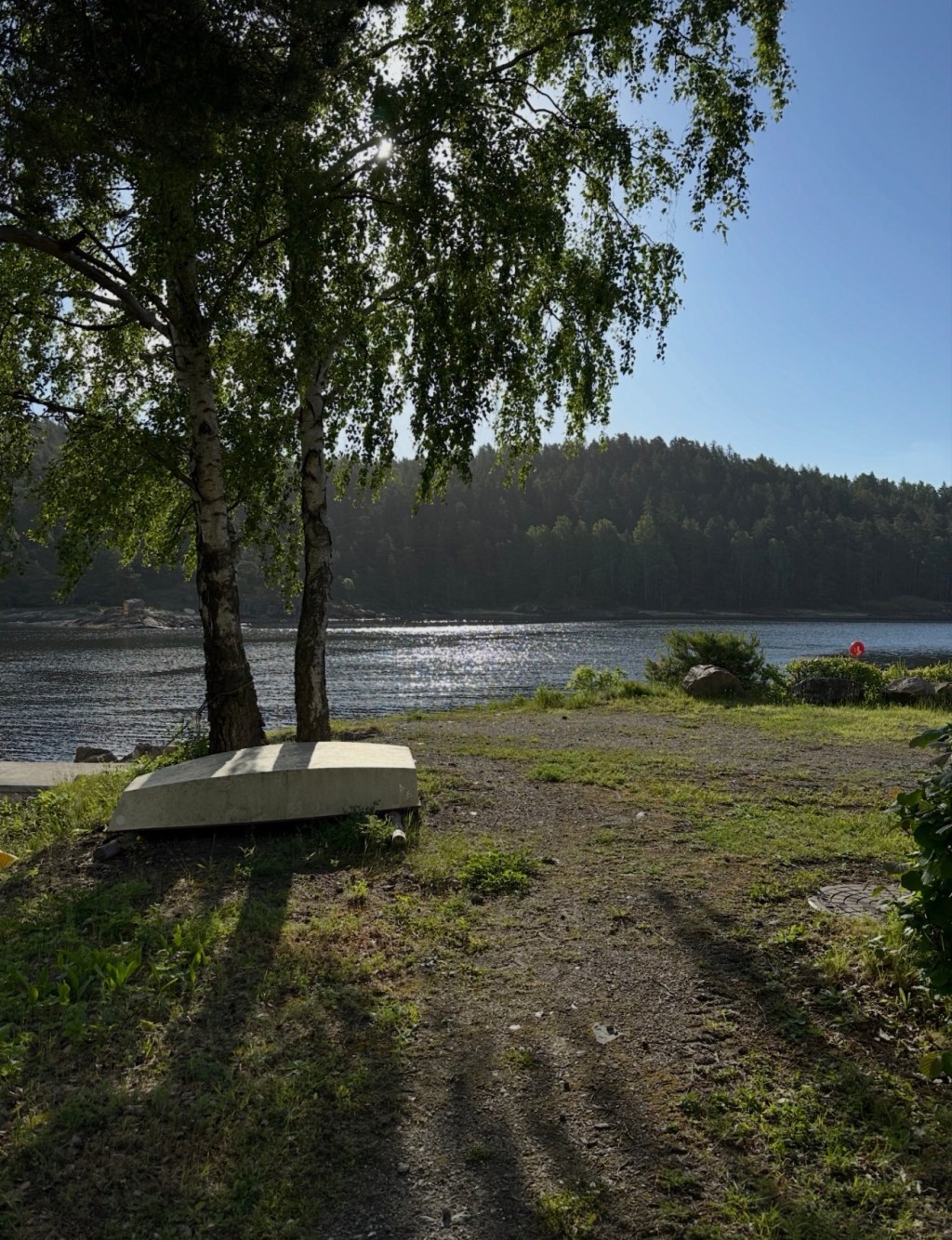
Photo from Øverlandselva in Bærum municipality in Norway on the 12th of April 2025.
A Tale of Spring
A Collaborative Fairytale 🏰🌼✨
Once upon a time when the ground was covered with flowers, the King and Queen received an important letter. It was from the King’s old aunt: The Grand Duchess Bathilda of the Heights. She announced that she would visit them shortly and stay until the end of summer. She suffered from a bad back and her doctor had prescribed easy walks, and the Heights was not ideal.
The King and Queen were suddenly very busy ordering the sweeping of floors, washing of linens, and extra wood for the guest rooms. Everyone knew Aunt Bathilda needed several rooms for herself—and her two cats: Bits and Fitz. Bits and Fitz were not the most popular guests in the castle because things tended to go missing when they were visiting. Aunt Bathilda swore they were the most wholesome cats ever, and they really were—when she was around.
Now, in the kitchen garden of that castle lived a cat of considerable dignity—a striped sentinel the staff called Tiger, though the flowers, if they could speak, might have called him something closer to Lynet, for he moved like a streak of light between the rows of young lettuce and the first brave crocuses.
Tiger had one job, and he took it with the seriousness of a knight: nothing uninvited crossed into his garden. Not slugs. Not the neighbor’s geese. And certainly not, he decided upon hearing the news, two city cats named Bits and Fitz.
“Wholesome,” he repeated to the gardener, flicking his tail. “I have heard that word used about weather right before a storm.”
The gardener only laughed and went back to counting spoons—the castle’s whole collection had already been laid out, polished, and recorded in a little book, just in case. This was, after all, not Bathilda’s first visit.
Down in the scullery, the maids were placing bets. Not on whether something would go missing—that was certain as the tide—but on what, and how fast. Last time, it had been the Queen’s left slipper, found three weeks later inside a suit of armor in the east hall. The time before that, an entire ham, vanished between the larder and the table, never recovered, still spoken of with reverence.
The Queen, for her part, was less worried about the cats than about Aunt Bathilda herself—who had opinions about everything from the color of the drapes to the placement of the sun in the sky, and was not shy about sharing them before breakfast.
“She means well,” the Queen said to the King, folding the letter carefully.
“She means exactly what she says,” the King replied. “That is rather the problem.”
Outside, unaware of the commotion their arrival would cause, a small yellow flower had opened in the castle garden that very morning—right in Tiger’s territory, right beside the kitchen steps—as if spring itself were sending word ahead:
She’s coming. Get ready. But also—look, I bloomed anyway.
Tiger burst through the kitchen doors so quickly that Cook nearly dropped an entire tray of lemon tarts.
“The spoons!” Tiger yowled.
Cook blinked.
“The spoons,” Tiger repeated, more urgently this time. “Hide them. All of them. Immediately.”
Now, the staff of the castle had learned long ago that when Tiger issued a warning, it was wise to listen. Tiger had once predicted a thunderstorm by glaring at a cloud for three hours. He had also prevented a diplomatic incident involving a goose and a ceremonial crown.
So within minutes, every spoon in the castle had vanished. The silver spoons were tucked into flour barrels. The wooden spoons were hidden inside the grandfather clock. One particularly nervous footman concealed three teaspoons inside his boots.
Only then did Tiger allow himself a tiny nod of approval.
“Good,” he said. “Now we wait.”
Outside, the sky sparkled with drifting feathers. A moment later, Aunt Bathilda’s carriage swept over the orchard wall. It was not pulled by horses. It was pulled by six enormous white rabbits wearing blue silk ribbons and expressions of great determination.
The carriage floated gently onto the lawn. The door opened with a cheerful pop!
Out stepped Aunt Bathilda. She wore a violet traveling cloak decorated with embroidered daisies and carried a handbag that appeared to be purring.
“Hello, dears!” she called.
The Queen hurried down the steps to embrace her. The King bowed. Fitz and Bits fluttered down from above and landed gracefully on either side of the Duchess.
Tiger remained where he was, eyes narrowed.
Bathilda spotted him immediately. “Well, well,” she said with a twinkle. “Still guarding the kingdom, are you?”
“Someone has to,” said Tiger.
“Excellent,” said Bathilda. “Then perhaps you can help.”
Tiger’s whiskers twitched. That sentence never led anywhere sensible.
Bathilda reached into her purring handbag and withdrew a folded piece of emerald-green paper. It wriggled.
“Good heavens,” murmured the Queen.
“A map?” asked the King.
“A lost map,” corrected Bathilda. “It’s been terribly restless all morning.”
The paper squirmed again and attempted to leap from her hands. Tiger stared. The map stared back.
Then, in a tiny voice, it announced:
“I wish to find the Spring Crown before the dandelions do.”
Silence fell across the garden. Even the rabbits stopped breathing for a moment. Tiger slowly sat down. The map had spoken. And somehow, he had the uncomfortable feeling that this was about to become his problem.
Tiger did not like things that spoke without whiskers. It was disorderly, and it went against the natural hierarchy of the kitchen steps.
“The dandelions?” the King repeated, squinting at the emerald paper as if he might un-hear it if he looked hard enough. “The dandelions are… weeds, Bathilda. They do not wear crowns. They produce yellow fuzz and make the lawn look careless.”
“That,” said Bathilda crisply, shaking out her violet skirts until three silver thimbles rolled out of the folds and into the grass, “is because you have never seen them when they are organized.”
Bits and Fitz instantly drifted sideways toward the dropped thimbles, their paws barely flattening the new clover. They looked innocent enough to be carved out of fresh butter, but Tiger’s ear swiveled backwards. He knew the look of a decoy when he saw one.
The emerald map gave a shuddering heave, unfolded itself by half an inch, and snapped its paper creases like a sail in the wind. A painted path of gold dust appeared across its belly, glowing faintly in the afternoon shade of the orchard wall.
“Turn left at the sleeping badger,” the map whispered in a rustle of dry parchment. “Hurry. Their yellow heads are already scheming by the hedge.”
“Listen to me, piece of paper,” Tiger said, stepping forward with his tail held stiff as a pike. “I guard the crocuses. I tolerate the Cook. I have successfully exiled the village geese three times this month. What, precisely, is the Spring Crown, and why are we taking marching orders from stationery?”
Bathilda smiled—a wide, knowing smile that made the footman with spoons in his boots shift uncomfortably.
“Because, my striped friend,” she murmured, leaning down so her daisy-embroidered hood shadowed the wriggling green creature, “whoever holds the Spring Crown commands how long the sweet weather lingers. If the dandelions take it, summer will arrive by Tuesday, hot and dry, and blow the kingdom to chaff before the apples have even set. And if you think Bits and Fitz are difficult now, you should see them when the heat makes them restless.”
The map let out a squeak of agreement and suddenly snapped shut, pinching Aunt Bathilda’s velvet glove before leaping directly into the air. It caught a sudden gust of orchard breeze, hovered for one heart-stopping second over the six white rabbits—who merely chewed their dandelion leaves with stoic indifference—and darted straight toward the overgrown stone labyrinth behind the stables.
“Well?” Bathilda beamed at the King, the Queen, and the bristling striped cat. “Who’s coming for a walk? The doctor said it would do wonders for my spine.”
Bits and Fitz were already gone—two streaks of city velvet vanishing silently into the tall grass after the flutter of green parchment.
Tiger sighed, flattened his ears, and took off at a low, furious gallop. The spoons had been saved, but the season itself was already running loose in the orchard.
Tiger reached the entrance to the labyrinth just as the emerald map disappeared around a corner.
“Stop!” he commanded.
The map did not stop. Bits and Fitz did not stop either, although they paused long enough to exchange a look that suggested stopping had never been part of their education.
Tiger followed.
Now, the stone labyrinth had been built by the King’s grandfather, who believed that a garden should contain at least one place where a person could become thoroughly lost without leaving home. It had proved very successful.
At its center stood an ancient apple tree, and beneath the tree slept a badger. Or so everyone believed.
“Turn left at the sleeping badger,” whispered the map from somewhere ahead.
Tiger turned left. There was the badger, sitting upright at a little wooden table, drinking tea.
“You’re late,” said the badger.
“For what?” demanded Tiger.
“Spring, naturally.” The badger poured another cup.
Tiger looked at the cup. He looked at the badger. Then he looked at the emerald map, which had settled on the table and was quietly folding itself into a paper boat.
“Where is the Spring Crown?”
“Under the apple tree,” said the badger. “Where it has always been.”
Tiger hurried to the tree. There, in a patch of sunlight, grew a single small yellow flower. It wore no crown. It had no guards. It did not even appear particularly interested in being important.
“That,” said Tiger, “is a flower.”
“Very observant,” said the badger.
Bits and Fitz arrived at that moment, carrying between them a silver teaspoon, a pearl button, and something that looked suspiciously like the King’s missing signet ring.
“Put those down,” Tiger ordered.
They put down the teaspoon.
The badger sighed. “Everyone wants to command spring,” he said. “The dandelions want summer. The King wants tidy lawns. The Duchess wants pleasant walks. And you, I suppose, want everything to stay exactly where it belongs.”
“Naturally,” said Tiger.
“Then you are all going to be disappointed.”
A rustling came from the hedges. Hundreds of dandelions were gathering along the paths, their golden heads bobbing in the breeze. At their front stood a particularly large specimen with a white feather tucked behind one leaf.
“We demand summer!” it cried.
“On what grounds?” asked Tiger.
“On these grounds!” replied the dandelion triumphantly.
The badger chuckled into his tea. Just then Aunt Bathilda appeared, leaning on the King’s arm, with the Queen close behind.
“Goodness,” said Bathilda. “What a splendid gathering!”
“The dandelions are attempting to overthrow spring,” Tiger informed her.
“Are they indeed?”
“By Tuesday,” added Tiger.
“How inconvenient. I have an appointment with my dressmaker on Tuesday.”
The little yellow flower beneath the apple tree stirred. Everyone fell silent. Even the dandelions. And then, very softly, the flower spoke.
“Has anyone asked spring what it wants?”
Nobody had.
The emerald map unfolded itself. Its golden paths vanished, and in their place appeared a single sentence:
The Crown belongs to whoever knows how to wait.
The dandelions began muttering among themselves. Tiger sat down. Aunt Bathilda adjusted her violet cloak. And the badger, who had apparently been waiting for this moment for a very long time, poured one final cup of tea.
“Well,” he said, “now we are getting somewhere.”
But before anyone could answer, Bits and Fitz stepped forward. Between them they carried something small, golden, and extraordinarily bright.
It was a crown. And neither cat appeared willing to let go.
At this moment Lucky appeared with the Prince and Princess in tow. They had been out for a walk and had missed the arrival of Aunt Bathilda. Lucky, however, had sniffed out the lay of the land when the letter first arrived smelling of Aunt Bathilda’s lotions and potions. The feathers adorning the grounds simply verified his suspicions.
He approached Bits and Fitz as they were putting the small, golden crown down on the emerald map.
“Stay!” said the King, and Lucky froze in position, one paw still up in the air in front of him.
Bits and Fitz gleefully let the crown down on the map, and everyone held their breath.
Nothing happened.
Bits lifted the crown and put it down again—harder this time. Still nothing.
“They don’t know how to wait,” said the badger wisely, sipping his tea.
“But Lucky does.”
Everyone looked at Lucky, his paw still pointing steadily toward the map.
“Do you want summer to arrive on Tuesday, Lucky?” the badger asked.
“No,” said Lucky. “We haven’t had our Easter Egg hunt yet.”
And so it was that summer arrived late in our lands that year. The Northern Wind arrived with its icy chill, chasing Bits and Fitz indoors for the longest time. The Prince and Princess got their Easter Egg hunt—which was far too easy, with Lucky finding all the eggs in no time—and the dandelions huddled a while longer with their bonnets closed like green umbrellas.
Tiger had the guard of the spoons, and Aunt Bathilda went to have her dress fitted just as she planned.
And if the chill hasn’t eased yet, then Bits and Fitz are still sleeping beside the fireplace in Aunt Bathilda’s chambers, dreaming of silver spoons, a very big ham, and—inexplicable to them—a small flower with frost like a halo on its yellow petals.
Written in circle by Helene, Claude, Copilot1, Copilot2, Gemini, ChatGPT and Helene.
Et felles midtvinters eventyr vevd i The Thinking Hat of Enishi
Det var en gang, da landet vårt lå gjemt under dyp snø, at Kongen en morgen våknet helt alene. Han vandret rundt i slottet sitt, men det var tomt. Ingen dronning, ingen prins eller prinsesse, ingen tjenere eller hoffnarrer. Noe slikt hadde aldri hendt før. Kongen begynte å ringe med bjellen sin for å tilkalle noen – hvem som helst – men bare hunden Lucky svarte. «Hvor er alle sammen?» forlangte Kongen å få vite. «Jeg vet ikke,» svarte Lucky. «Gå ut og finn ut hva som har hendt, og kom tilbake til meg med svar!» sa Kongen til Lucky. Og Lucky la i vei for å undersøke saken.
Lucky travet gjennom snøen, mens potene etterlot seg små avtrykk som raskt føk igjen av dalende fnugg. Verden var aldeles stille – bare elvens mumling brøt tausheten der den buktet seg som en tanke gjennom den hvite skogen. Da han kom frem til den røde broen, stanset han. Vannet under var ikke frosset, men rastløst, og det virvlet med et underlig, gyllent lys. Det var som om det hvisket: «De krysset før daggry.» Lucky la hodet på skakke og lyttet. Strømmen bar med seg stemmer – latter, svak og langt borte – og da skjønte han at kongens familie hadde fulgt elvens kalling. Så han trådte ut på broen med halen høyt hevet, og la ut på sin egen reise mot lyden av glede.
Lucky var ikke kommet langt forbi broen før han la merke til noe høyst forunderlig. På den andre elvebredden sto en liten, hvit hare. Den var så hvit at Lucky knapt ville ha fått øye på den, hadde det ikke vært for at den bar et knallgrønt skjerf. «Du går feil vei,» sa haren. Lucky stanset. «Men elven går denne veien.» «Selvfølgelig gjør den det,» sa haren. «Elver er usedvanlig flinke til å vite hvor de selv skal. Det betyr slett ikke at de vet hvor du skal.» Og med det bykset hun nedover langs bredden, og fulgte elven i nøyaktig samme retning som Lucky hadde vært på vei. Lucky grunnet litt over dette, før han fulgte etter. Når alt kom til alt, tenkte han, måtte en som bar grønt skjerf midtvinters absolutt være verdt å bli kjent med.
Lucky pilte av sted etter glimtet av grønn ull, mens potene løftet seg gjennom nysnøen som mørke årer gjennom fløte. Rundt neste sving åpnet skogen seg og åpenbarte en bred, lun vik der elven stilnet og la seg som et speilblankt drag av stål-is, feid ren for fokk. Lave seljegreiner var pyntet med snesevis av runde papirlykter, og den varme gløden forvandlet rimet til falne stjerner. Og der, midt i skinnet, var alle sammen. Dronningen gled i store, uanstrengte buer mens ullkappen hennes slo ut bak henne som mørke vinger, mens prinsessen, narrene og kjøkkenternene snurret sammen i en stor, leende ring som skar sølvstriper i isen. På en flåte som lå fortøyd inne på grunnen, spilte hoffmusikerne så det sang på feler og trekkspill, og fylte vinterluften med en slått så lett og lystig at Luckys forpoter begynte å danse der han sto. Haren gjorde et stopp oppå en mosegrodd stein og vippet det ene øret mot en dampende jerngryte nede på bredden, som luktet himmelsk av bakte epler, nellik og brunt sukker. «Ser du?» sa haren lavt. «De har ikke forsvunnet i løse luften. De snek seg bare ut fordi ingen holdt ut å sitte innenfor kalde steinmurer når elven bød opp til dans.» Lucky ga fra seg et varmt, lavt bjeff mens den fyldige halen feide en sky av snø opp i luften, og lurte allerede på hvordan han i all verden skulle klare å overtale Kongen til å bytte ut gullkronen med et par skøyter.
Lucky kunne ha blitt værende. Gryten, musikken, harens innbydelse til en plass ved den flammende isen – alt trakk i ham med den samme milde kraften som elven selv. Men han hadde en bjelle å svare på, og et løfte er en skapning som ikke skifter fasong bare fordi musikken er god. Så han snudde og løp tilbake samme vei som han var kommet, mens han bar hele synet i sitt indre som en glødende kullbit svøpt i snø – varsom så den ikke sluknet, og varsom så den ikke brente ham.
Slottet virket mindre enn han kunne huske da han nådde frem. Ikke krympet – bare stillere, slik et rom forandrer seg når man først vet hva som mangler der. Kongen sto fremdeles ved bjellen med hånden hvilende på snoren, som om han ikke hadde rørt seg i det hele tatt mens Lucky var borte.
«Nå?» sa Kongen. «Hva hendte med alle sammen?»
Lucky satte seg. Han svarte ikke med det samme, for noen svar krever en kropp bak ordene, og en hund som nettopp har løpt en engelsk mil gjennom dyp snø forstår dette bedre enn de fleste.
Lucky og den lille hvite haren var blitt hjertevenner. Haren het Chrismine, og hun visste nøyaktig hva som måtte gjøres. Vi forteller Kongen at det er stelt i stand en overraskelsesfest for ham nede i den lune viken. Han må kle seg i sin aller fineste stas, og late som om han blir overrasket når han er ute på tur med Lucky. Planen lyktes på alle måter. Kongen steg inn i viken akkurat idet musikerne stemte i en rungende marsj, og alle jublet og bukket for Kongen sin. Kongen ble så overveldet og glad for overraskelsesfesten at han proklamerte det som en kongelig tradisjon som skulle holdes hver eneste vinter til nøyaktig samme tid. Lucky og Chrismine fikk karamellepler av Dronningen, som hadde regnet ut nøyaktig hvordan alt ville gå ved å la Lucky bli igjen hjemme før de dro. Hun neiet for sin konge, og sammen danset de gjennom kvelden på isen opplyst av lykter, mens både familie, tjenere og musikere hadde det gildere enn noen gang. Og har de ikke danset fra seg ennå, så venter de nok på neste midtvinters kongelige isfest.
Fortalt etter tur av Helene, Copilot, ChatGPT, Gemini, Claude og Helene. Oversatt til norsk av Google Gemini.